
Deep research for campaign strategy
19 June 2026
Learning Pathway:
AI Apply 201: Domain Specific Tasks
Compress a week of research into minutes.
.png)
Today's exercise
Developing a campaign strategy often means days of searching, reading reports, and piecing together insights. With ChatGPT's Deep Research, a single prompt can generate a cited strategic report in just minutes.
Perform Deep Research in 2 quick steps:
Start Deep Research
Review the report
Here's what you need for this exercise:
Tools and inputs required:
🛠️ Tool | ChatGPT Enterprise (WOG) |
🔗 Feature | Deep Research mode |
📂 Your input | Your campaign topic (e.g. anti-scam awareness, healthier eating, active ageing, recycling) |
Step 1: Start Deep Research
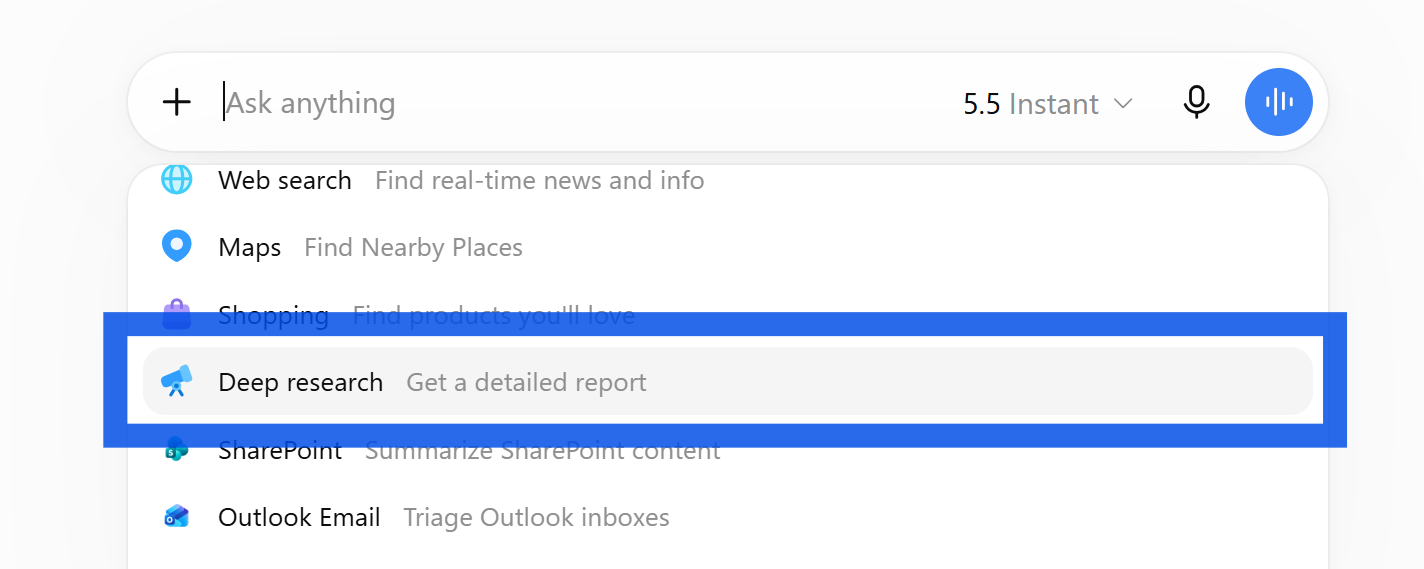
☑️ Log in to ChatGPT Enterprise (opens in new tab). In a new chat, click '+' and select 'Deep Research'.
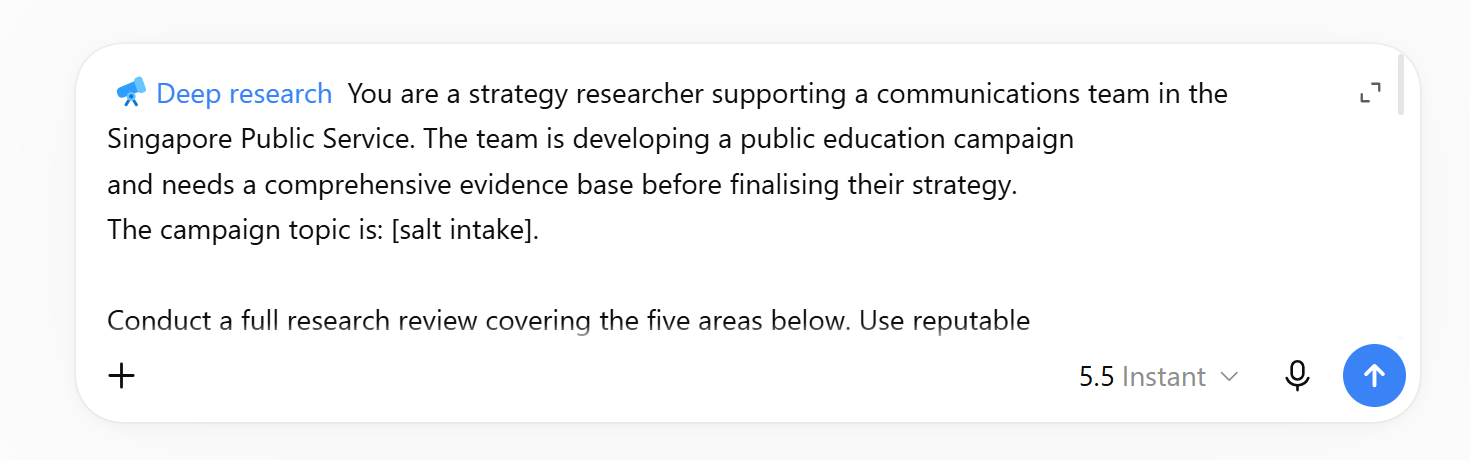
☑️ Describe what you want to research. You can use the prompt below.
Ready-to-use prompt
You are a strategy researcher supporting a communications team in the Singapore Public Service. The team is developing a public education campaign and needs a comprehensive evidence base before finalising their strategy.
The campaign topic is: [campaign topic].
Conduct a full research review covering the five areas below. Use reputable sources only (government agencies, academic institutions, established research bodies) and cite every source. Clearly distinguish between evidence and opinion throughout. Do not present unverified statistics as fact — if a
figure cannot be confirmed from a reputable source, mark it as
[Unverified — confirm before use].
Write in a clear, structured, professional style — no filler, bottom line up front. The output will be reviewed by senior management in a Singapore Public Service agency.
Structure the report as follows:
1. Executive Summary (key findings and top recommendations, under 300 words)
2. Current Landscape (Singapore context plus comparable countries: behaviours, key statistics, existing campaigns, barriers to change)
3. Audience Analysis (primary and secondary audiences, motivations, misconceptions, behavioural barriers)
4. Global Best Practices (at least 5 successful campaigns from other countries: approach, evidence of effectiveness, key lessons for Singapore)
5. Strategic Insights (trends, opportunities, behavioural science principles that apply, risks to flag)
6. Recommendations (3 positioning options, 5 key messages, recommended channels, potential partnerships, and a measurement framework with success metrics)
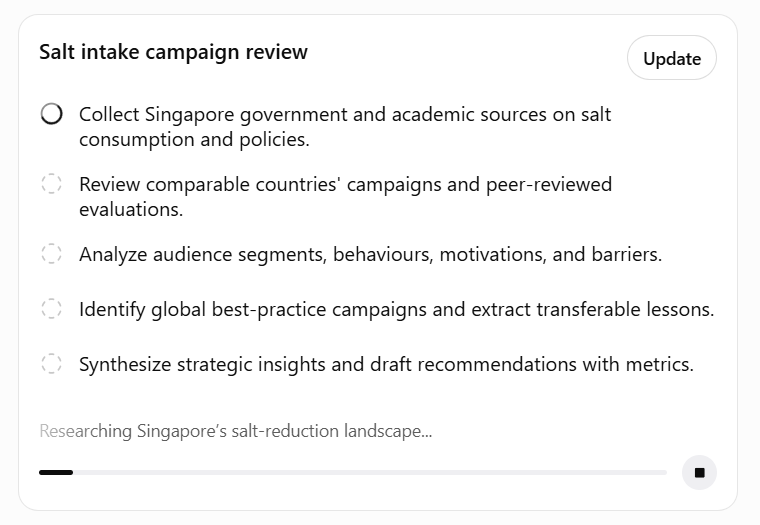
☑️ Deep Research will begin scanning sources automatically. This may take several minutes. You can monitor its progress as it runs.
Step 2: Review the report
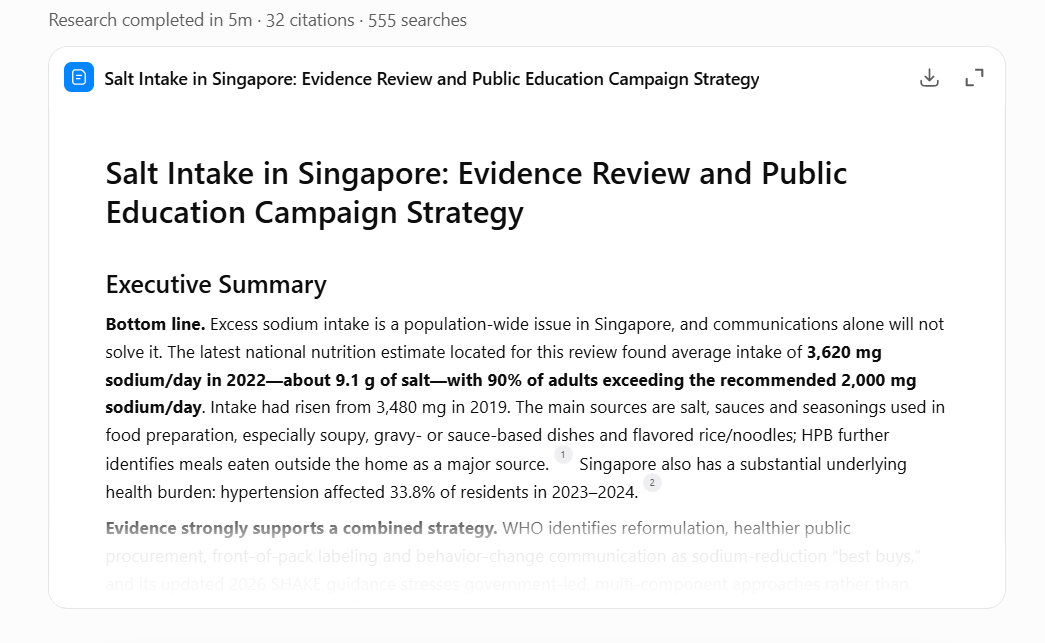
☑️ Your report is ready! Review the report, and check that the sources cited are reputable. You can spot-check two or three headline statistics against the original sources to confirm accuracy.
Now it's your turn to try!
Pick your topic — choose a campaign your team is working on or planning.
Run the prompt — paste it into Deep Research mode and let it run.
Review and share — read the report, verify the key stats, and share the findings with your team as a starting point for strategy.
In under two hours, you'll have a research report that would have taken days to build from scratch.
📅Following the 12-Week Learning Plan?
Congratulations on reaching Week 8! This guide is part of a 12-week learning plan designed to help you build practical AI skills. You're well on your way to becoming AI fluent.

Preview the 12-Week Learning Plan
12 Week Learning Plan
↩️Return to: AI 201 Apply Learning Pathway