What is AI and why does it matter?
6 July 2026
What It Is, What It Isn't, and Why It Matters

Why is everyone talking about AI?
Artificial intelligence has existed for decades. You've probably been using it for years without thinking about it.
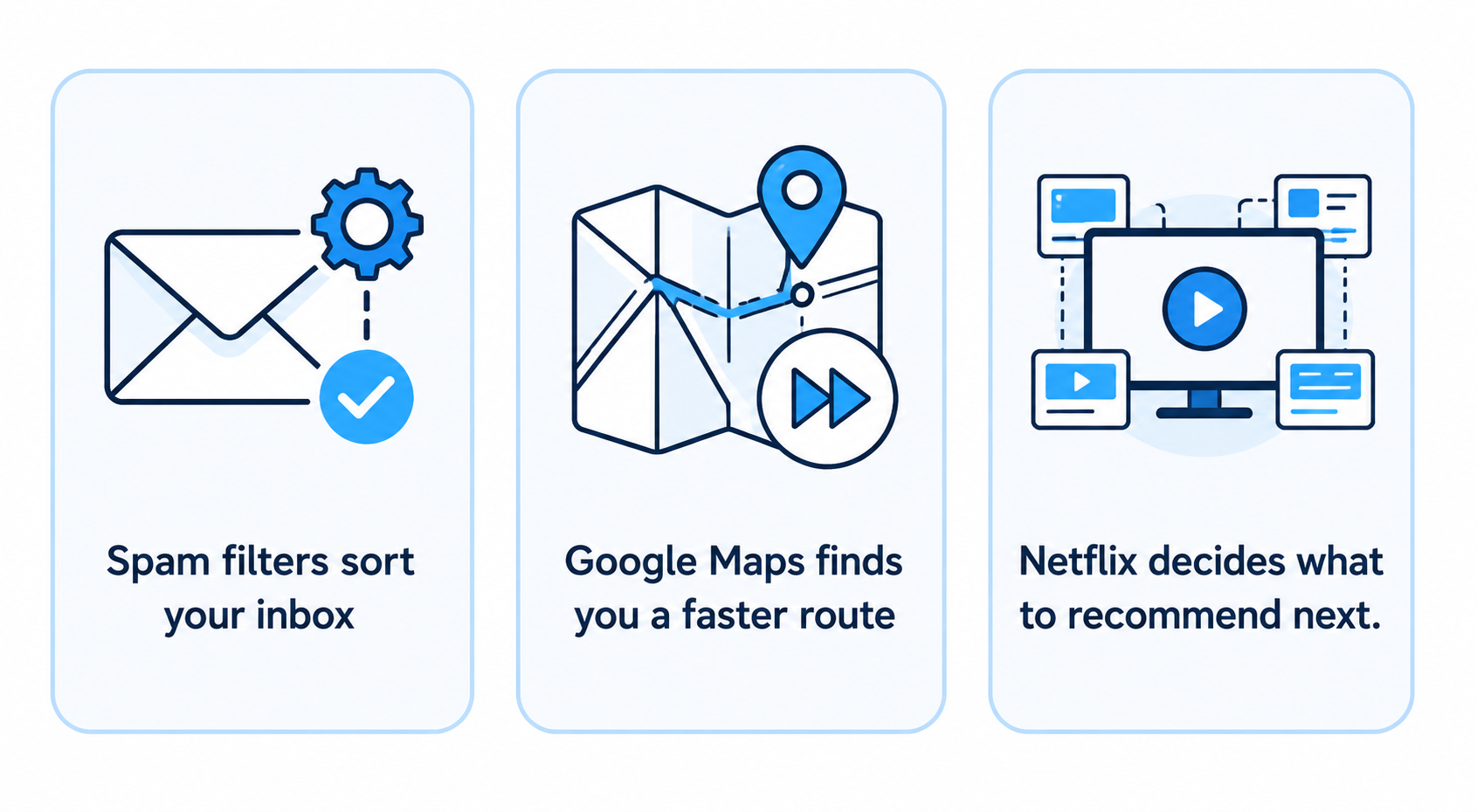
So why does AI suddenly feel like such a big deal?
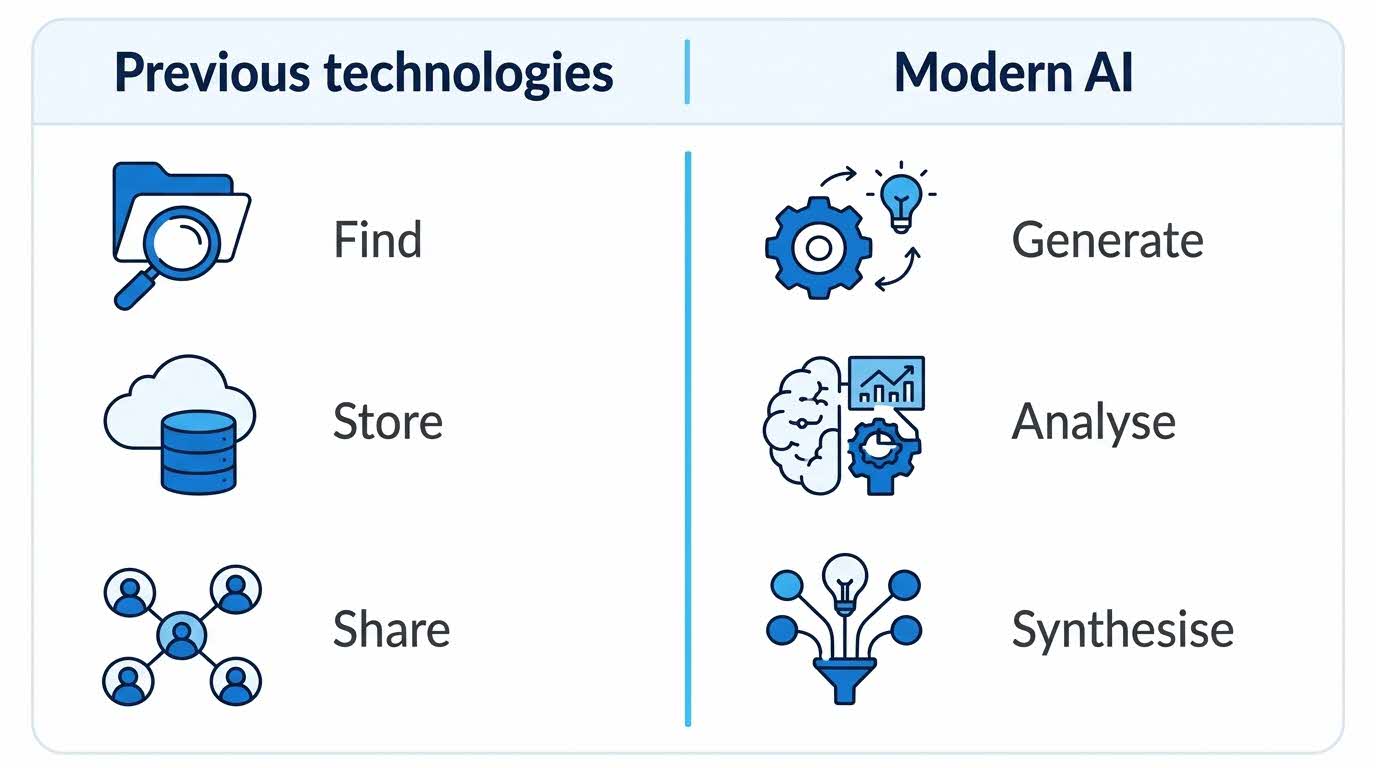
Previous workplace technologies helped us manage information. AI doesn't just manage information — it generates, analyses, and synthesises it. That's what sets this wave apart.
For the first time, anyone can interact with a powerful AI system just by typing into a chat box. Instead of searching for an answer, you can ask AI to explain, summarise, compare, draft, or brainstorm. That opens up entirely new possibilities for knowledge work including ours.
What is AI?
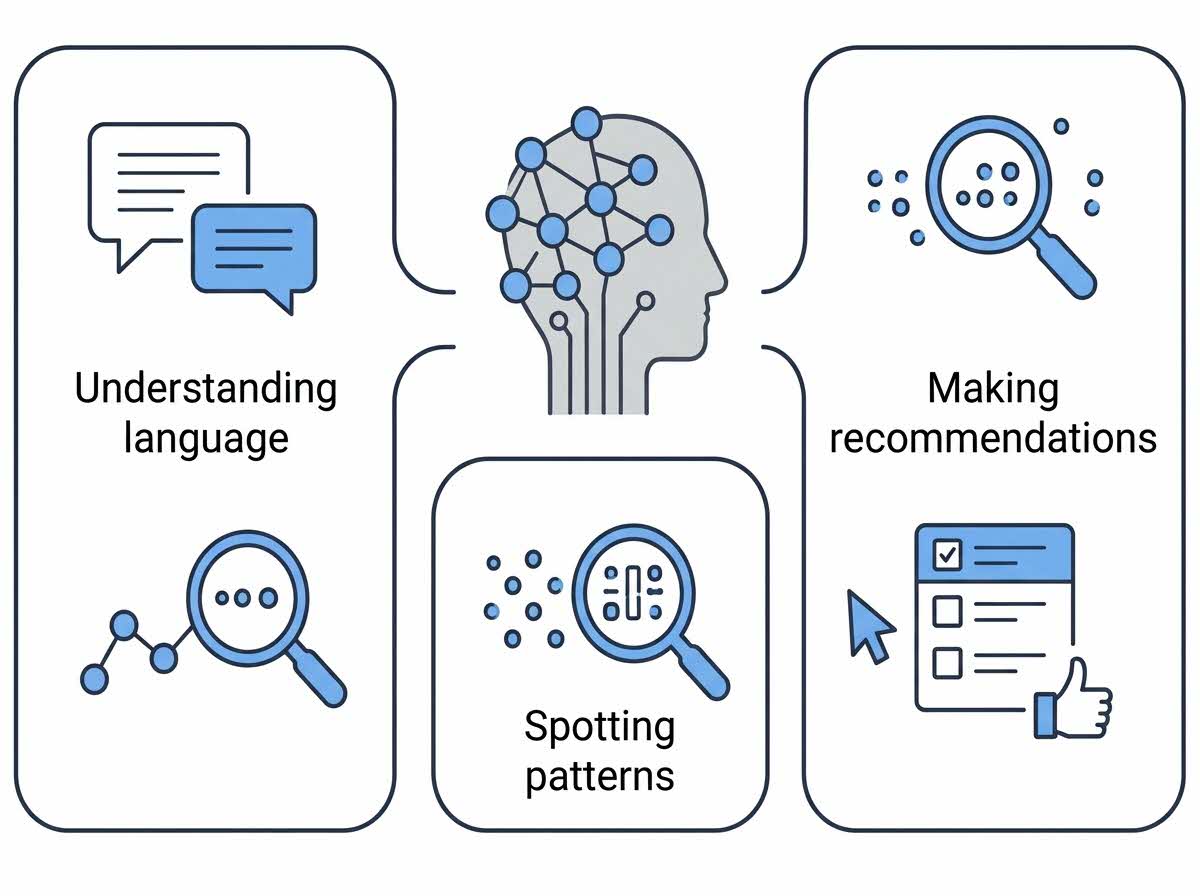
At its simplest, AI refers to computer systems that perform tasks that normally require human intelligence:

You already use it every day. Your phone predicts your next word. Search engines rank results by relevance. Banks flag unusual transactions automatically.
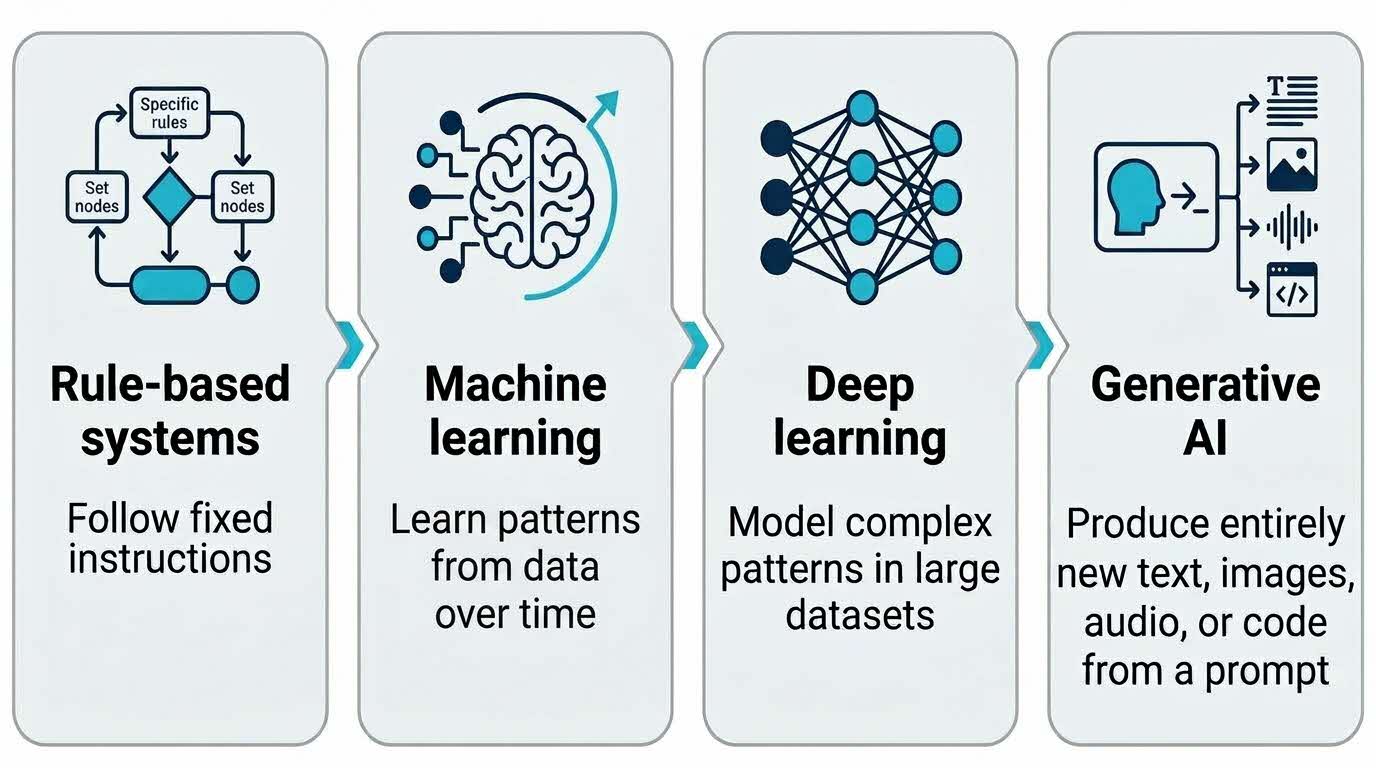
AI isn't one technology. It's a family of approaches, each more capable than the last:
Rule-based systems - follow fixed instructions
Machine Learning - learn from data over time
Deep Learning - model complex patterns in large datasets
Generative AI - produce entirely new text, images, audio, or code from a prompt
What is Generative AI?
Generative AI is a type of AI that creates new content - text, images, audio, code, summaries. Instead of retrieving existing information, it generates something new.
Popular examples include ChatGPT, Claude, and Gemini.
Generative AI can help you draft an email, explain a policy concept, summarise a report, or generate ideas for a presentation. But it doesn't "know" things the way humans do. Understanding that distinction matters.
How does it actually work?
Many people imagine AI as a digital expert with access to perfect knowledge. That's not how it works.
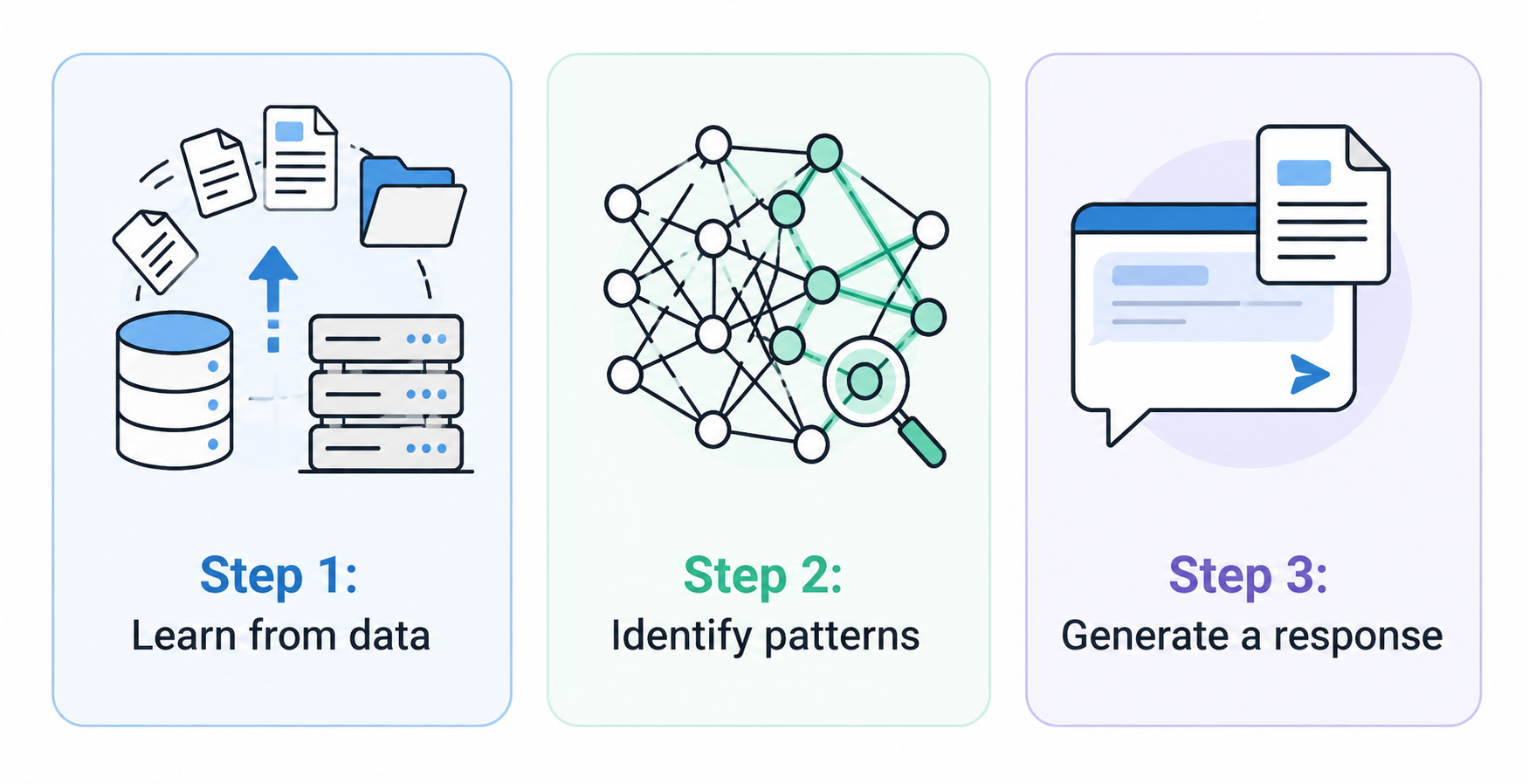
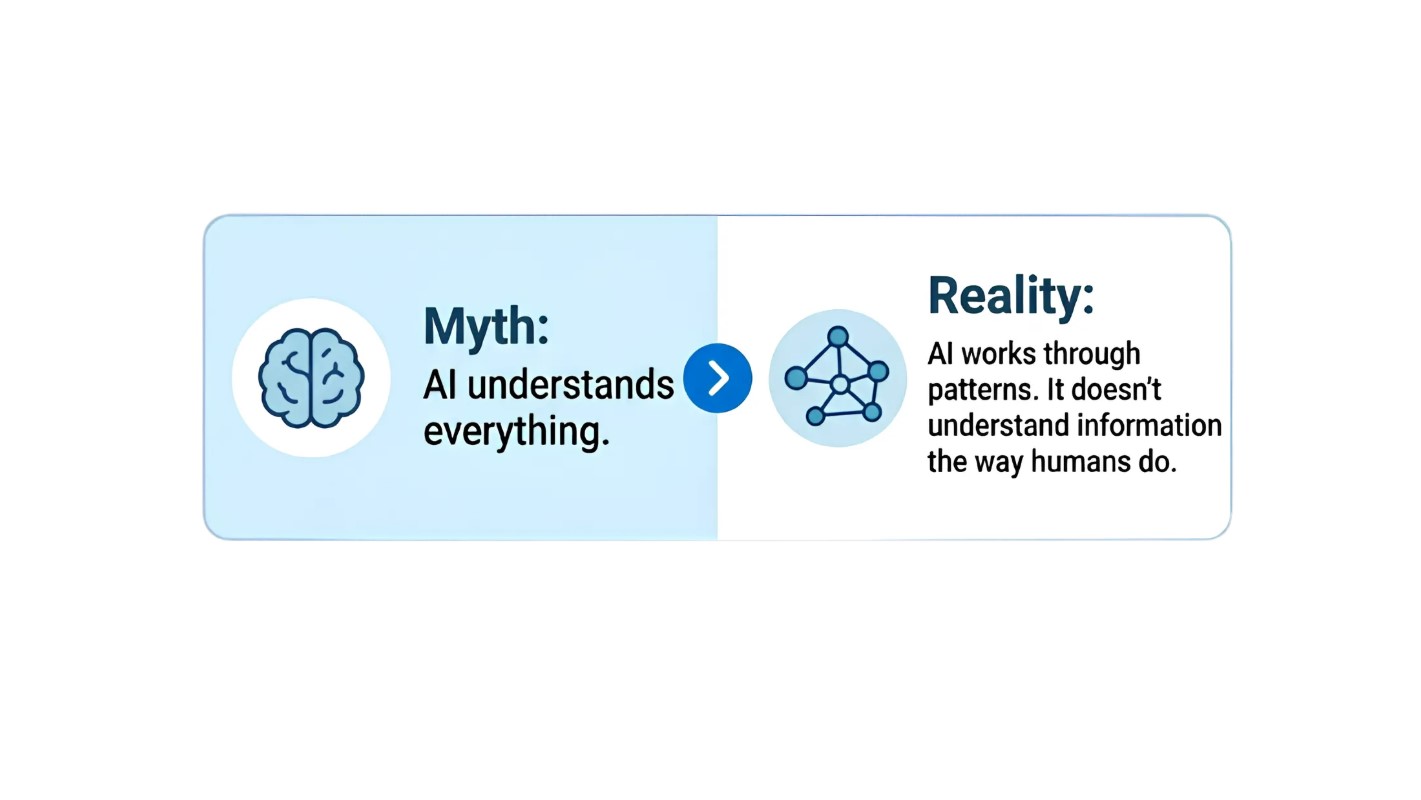
A more useful way to think about it: generative AI is an extremely advanced prediction engine. When you type a prompt, the AI predicts what words are most likely to come next, based on patterns it learned from a huge amount of text during training.
The process works in three steps. The quality of that output depends on two things: the training data, and the instructions you give it.

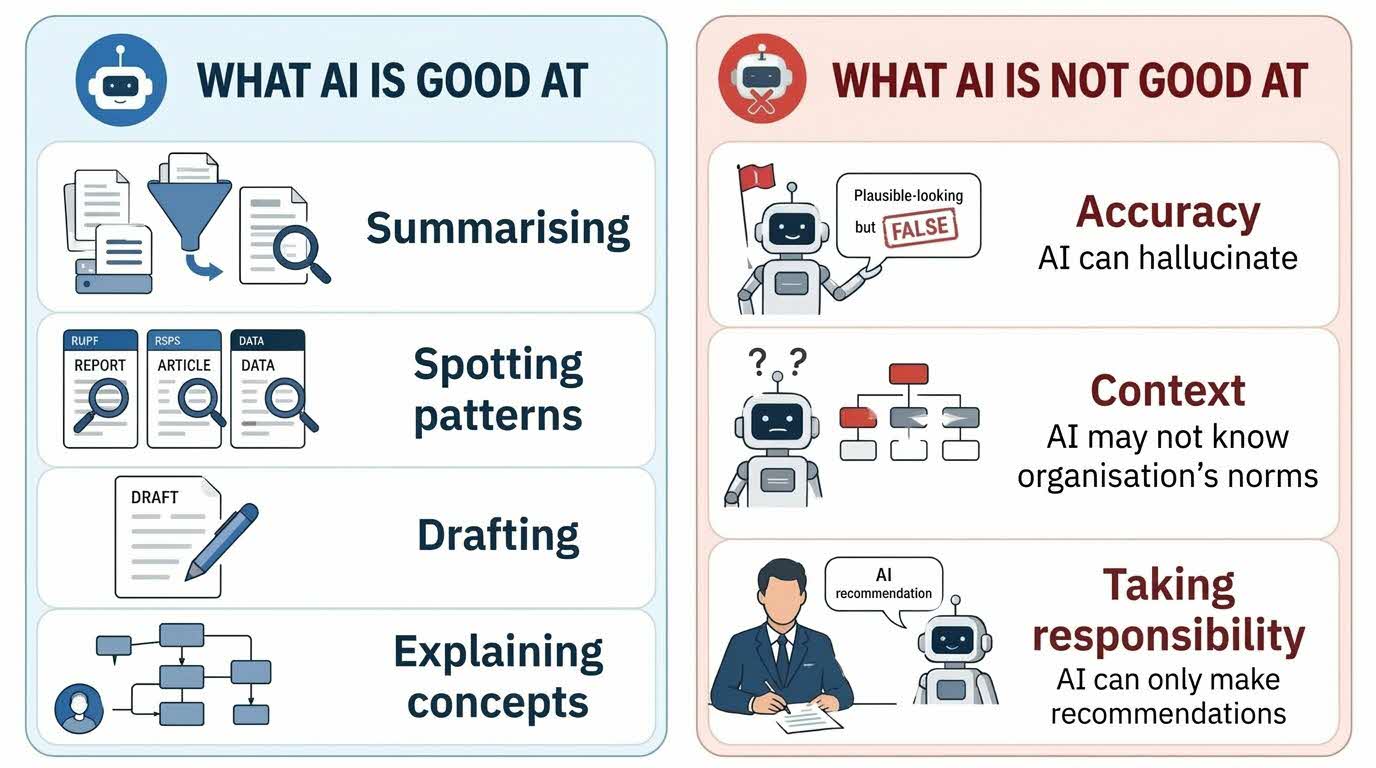
What AI is good vs not good at
AI tends to perform well when tasks involve large amounts of information, recurring patterns, or first-draft creation.
.png)
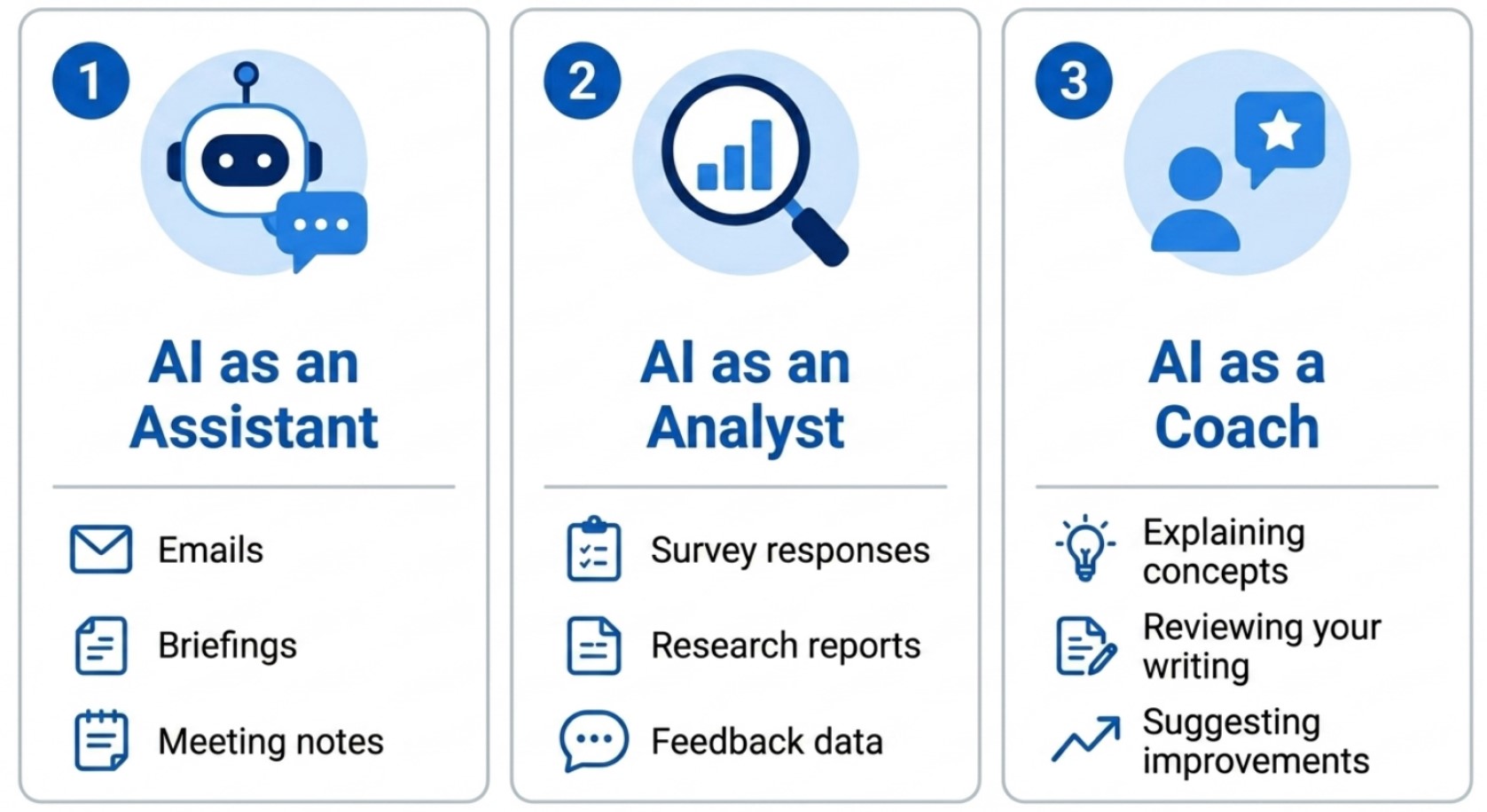
Three ways to think about AI at work
Instead of asking "What can AI do?", it's more useful to ask what role you want AI to play.

Common misconceptions
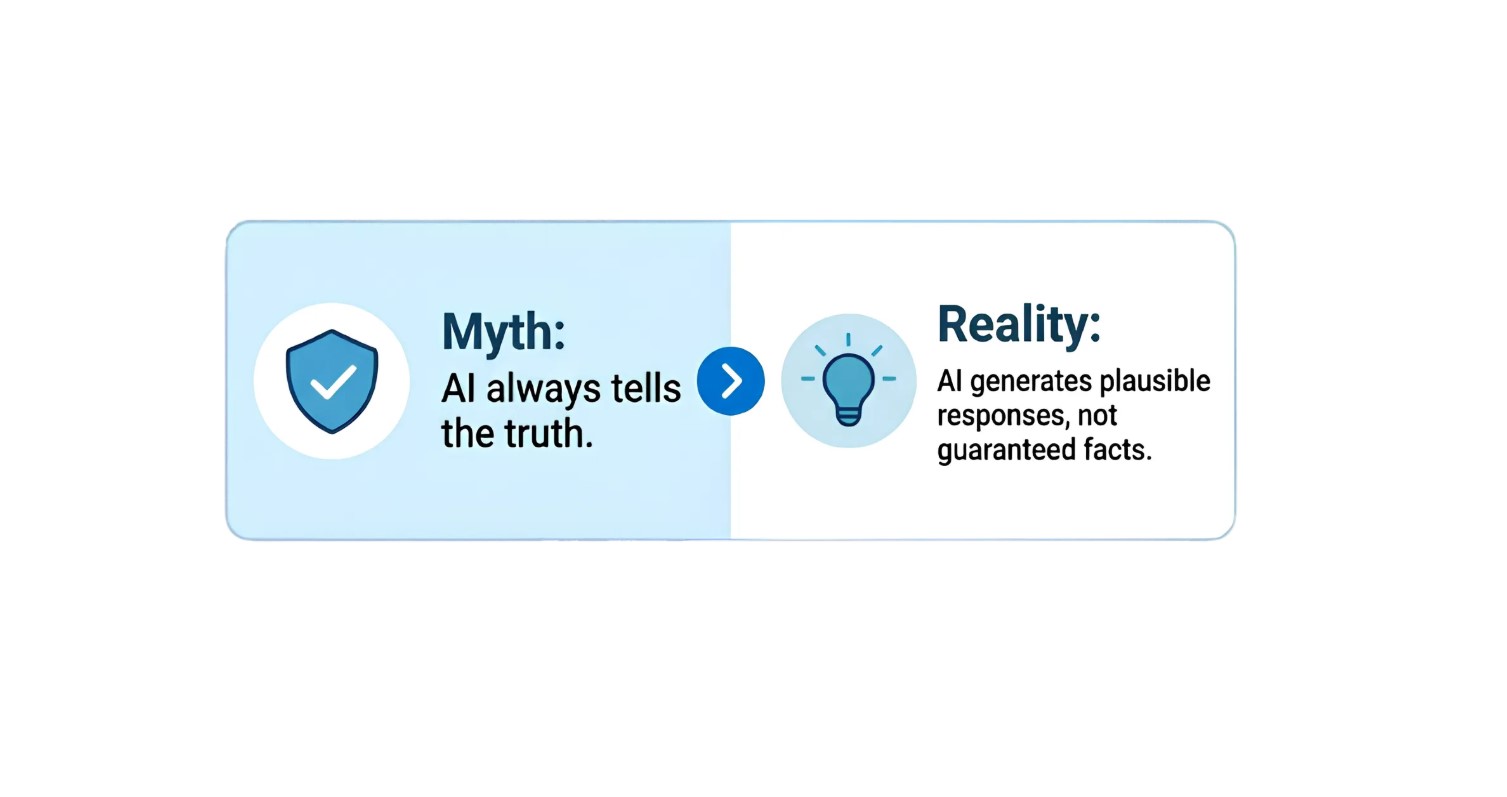
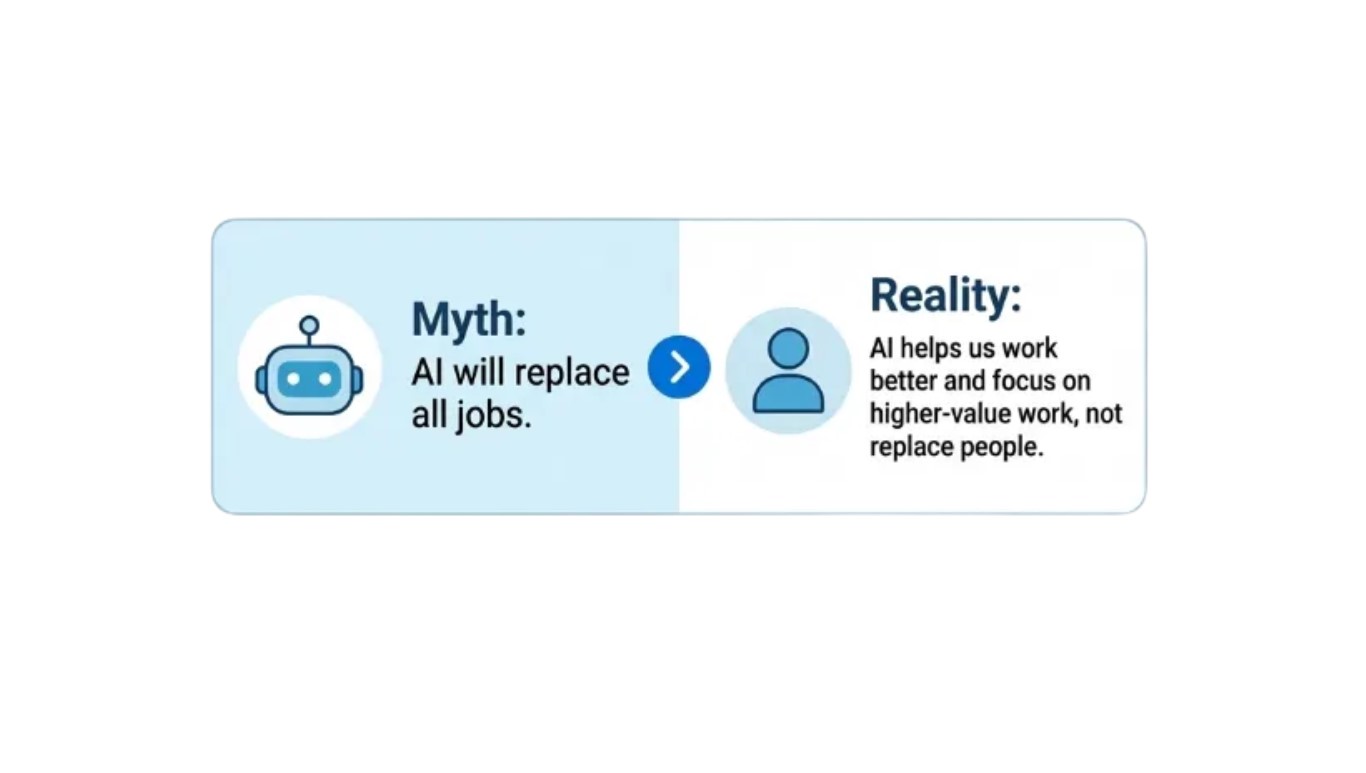
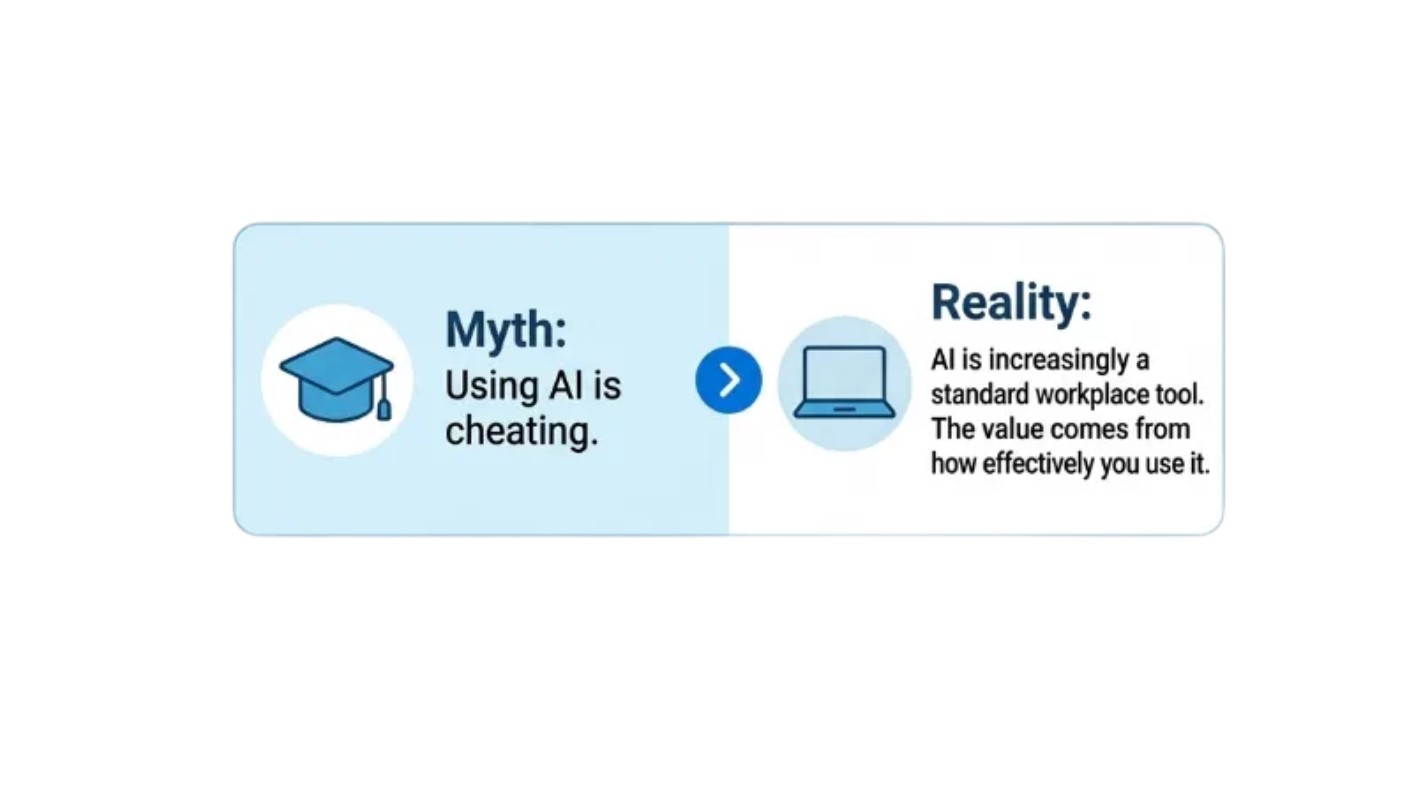
Busting the myths around AI:

What does it mean for me?
It's not just about productivity. Generative AI is reshaping the workforce at a pace most people underestimate.
Research suggests that a significant and growing share of work tasks across almost every profession will be augmented or changed by AI automation in the coming years. This isn't a distant forecast. It's already playing out.
The good news: the officers who adapt earliest will be the most effective. AI doesn't replace the need for expertise, judgement, and empathy. It frees you up to spend more time on exactly those things.
Used well, AI can reduce time spent on repetitive tasks, help you process information faster, and make you more effective at the work that actually matters not less human, but more so.
Key takeaways
AI helps computers perform tasks that normally require human intelligence.
Generative AI creates new content - text, images, code, audio from a prompt.
AI works by learning patterns from large amounts of data, not by "knowing" facts.
AI is useful for summarising, analysing, and drafting.
AI can make mistakes. Never treat it as a source of truth.
The workforce impact is already here - officers who build AI fluency now will be better placed for what comes next.
Human judgement remains essential, especially in public service.
[Additional Resource] Watch this 5min video on "What is GenAI"

📅Following the 12-Week Learning Plan?
Congratulations on reaching Week 3! This guide is part of a 12-week learning plan designed to help you build practical AI skills. You're well on your way to becoming AI fluent.

Preview the 12-Week Learning Plan
12 Week Learning Plan
Week 1 | |
Week 2 | Webinar: Introduction to AI-First |
Week 3 📍 | Webinar: Open AI ChatGPT Foundations |
Week 4 | Webinar: Introduction to AI-First |
Week 5 | Using AI responsibly |
Week 6 | Meeting Minutes with AI |
Week 7 | Generate a Daily Morning Brief |
Week 8 | AI Apply 201: Domain Specific Tasks |
Week 9 | Workflow Mapping & Peer Sharing |
Week 10 | |
Week 11 | Your AI Playbook |
Week 12 | |
Week 13 | CAT Brownbag at Lorong |
⏭️Next Guide: How do we use AI at work?
↩️Return to: AI 101 Aware Learning Pathway