
Product Thinking: Metrics
19 May 2026
Learning Pathway:
AI Build 301
Learn how to choose metrics that help you track progress towards meaningful outcomes.

3 Tools You Can Use
We have a problem statement. Now we need to know how we'll measure progress. Three tools help us define better metrics:
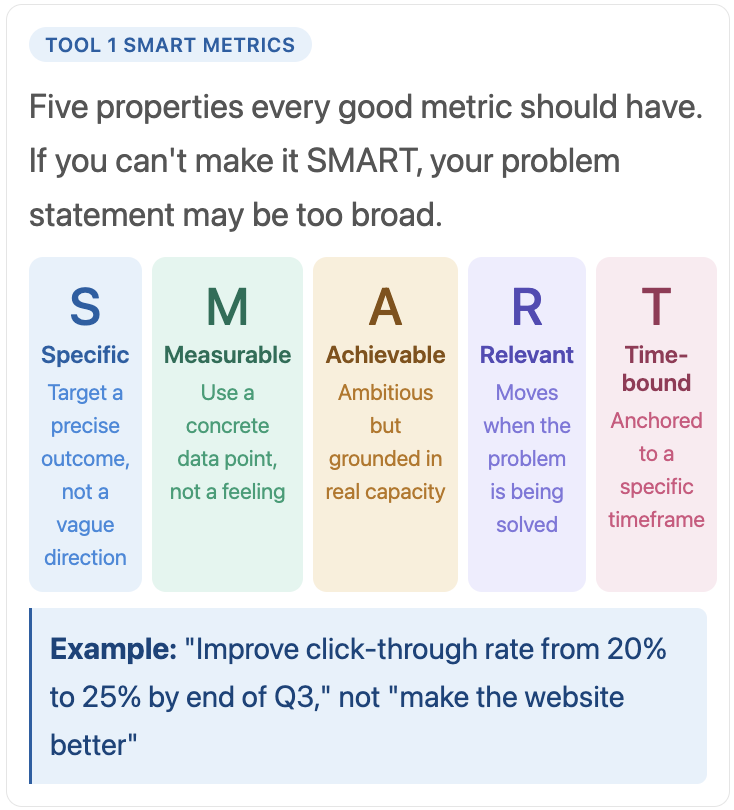
SMART: what good metrics look like
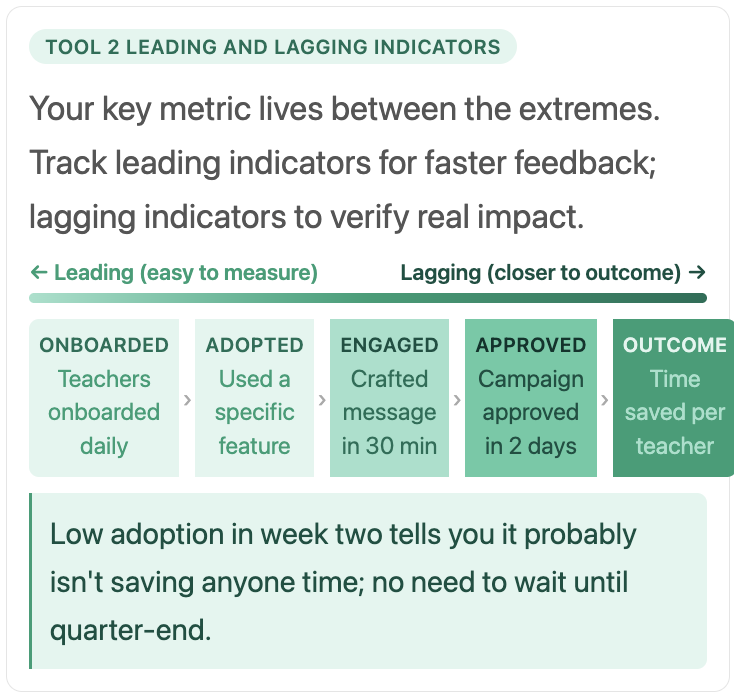
Leading and lagging indicators: how to find the right one to track
Value-cost ratio: a lens for assessing return on investment
Tool 1: SMART
Use SMART as a check for whether a metric is specific, measurable, achievable, relevant and time-bound.
Tool 2: Leading and Lagging Indicators
Leading indicators provide early feedback, while lagging indicators measure real outcomes. The key is understanding how they work together.
Tool 3: Value-Cost Ratio (VCR)
The Value-Cost Ratio (VCR) is a simple lens for comparing the value a solution is expected to create with the resources required to deliver it.
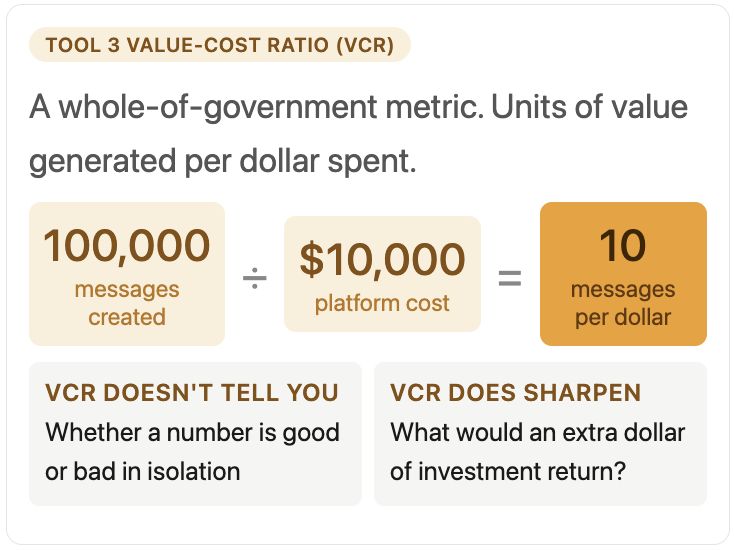
Not all public-sector value can or should be expressed in dollars, so use VCR as one input alongside other considerations.
Try it out!
Identify the most appropriate metric for your problem statement.
Map your leading and lagging indicators to locate that metric on the chain.
Derive your current VCR. What would need to change to improve it?