
Is it Human, Automation or AI?
28 September 2026
Learning Pathway:
AI Aware 101
Learn the best approach for each task: simplify, automate, use AI, or stay human-led.
Your team has a time-consuming work process. Should you use AI?
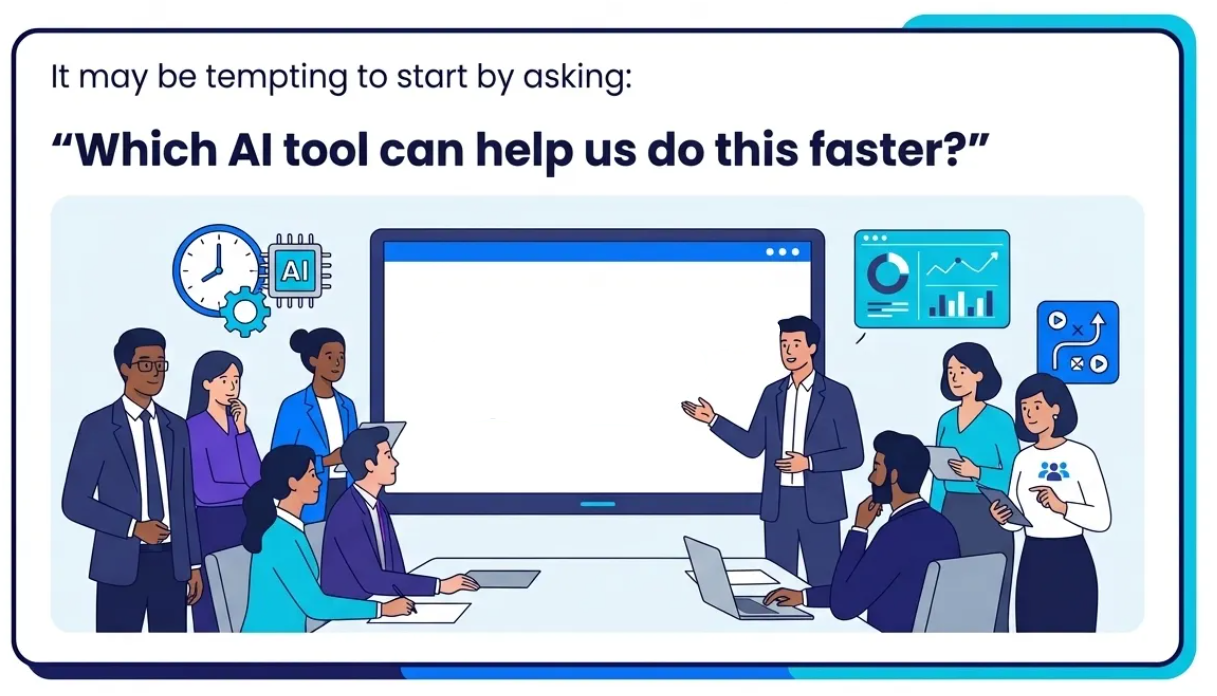
But that may not be the right first question. Before choosing a tool, consider:
whether the work is still necessary,
whether the process can be simplified, and
where automation, AI or human judgement is most appropriate.
Start with the work, not the tool
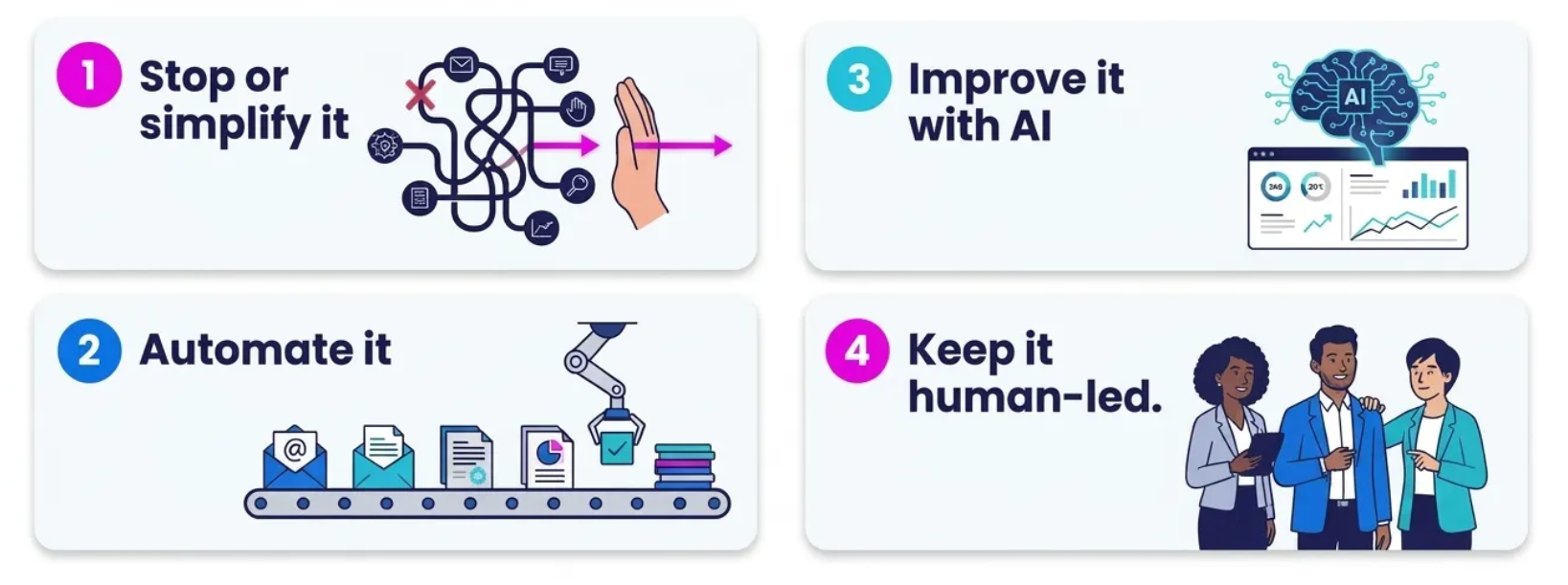
First think through what the work process requires. Then decide which of these approaches apply:
Pause and think:
Think of one recurring task that takes up a significant amount of your time. If you were designing the process today, would you keep every step?
Let's find out more about each approach
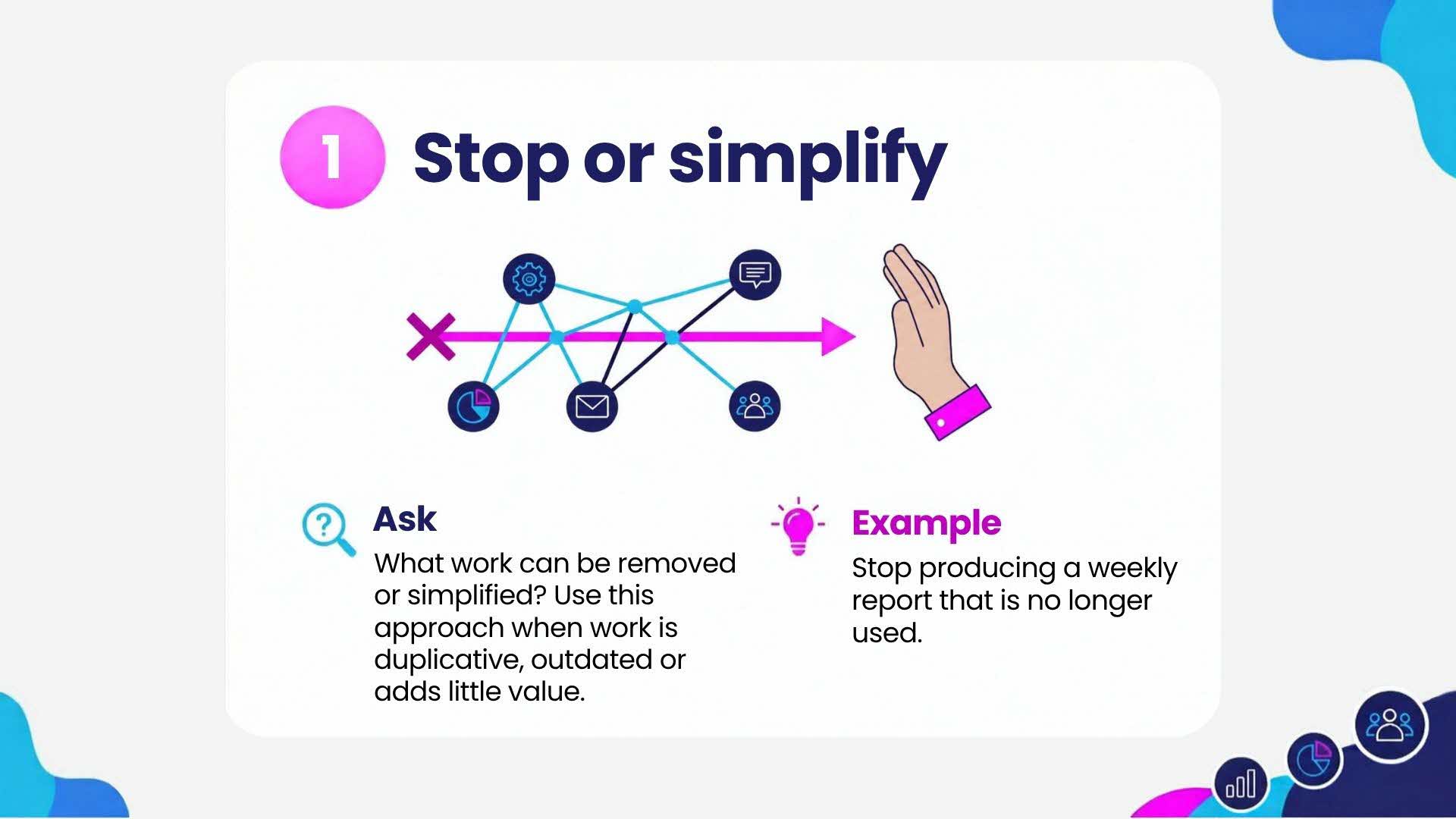
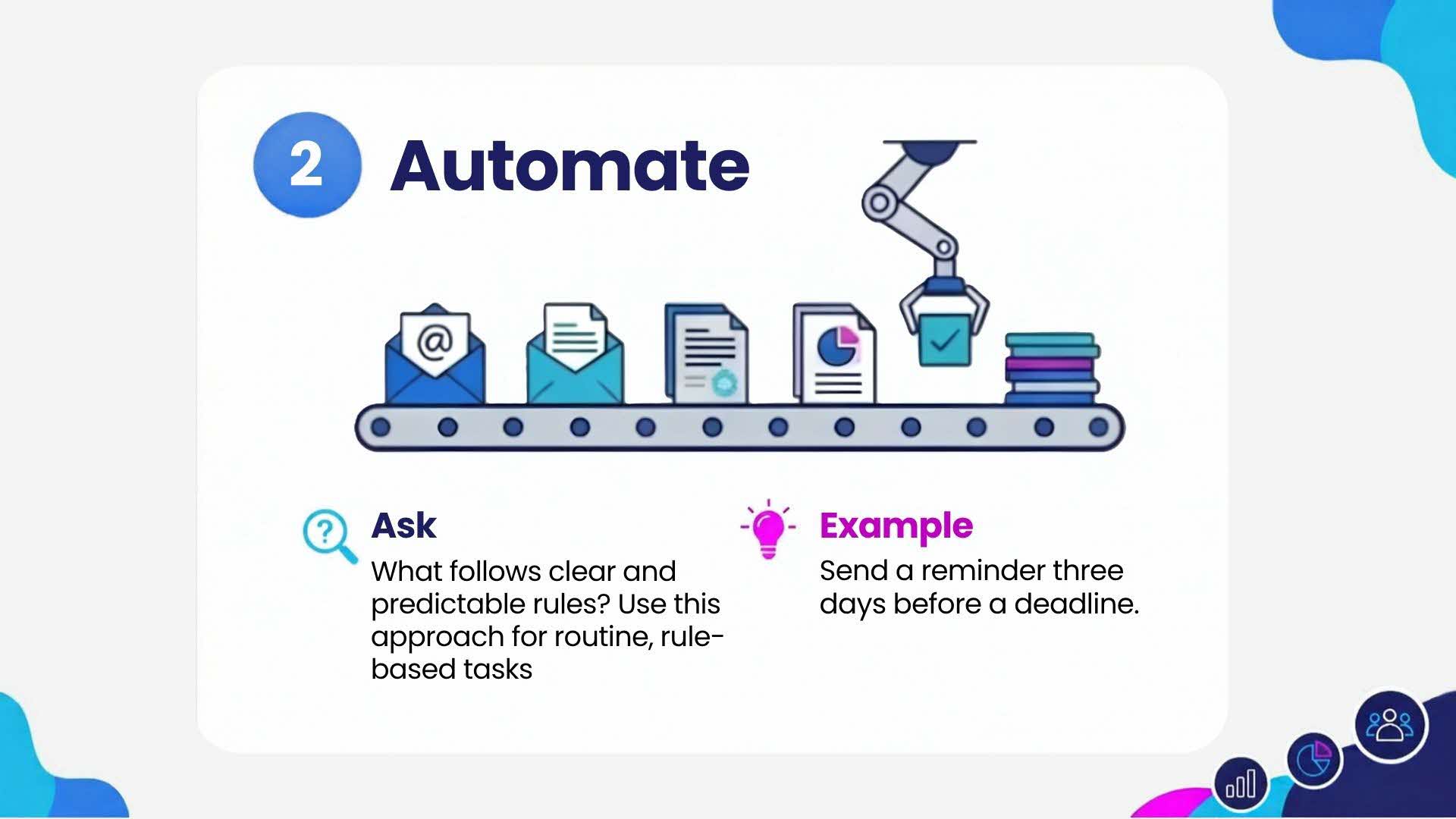
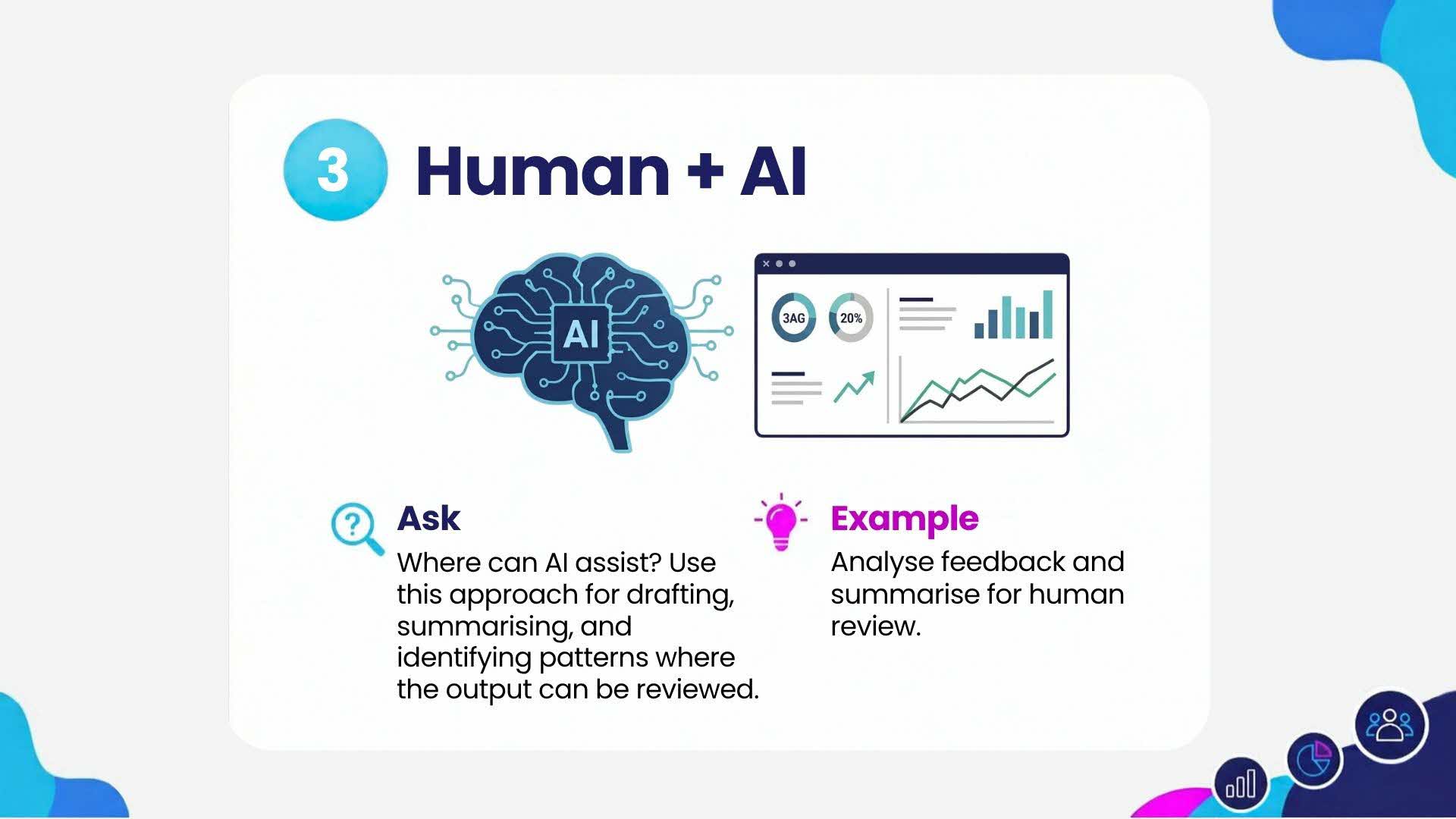
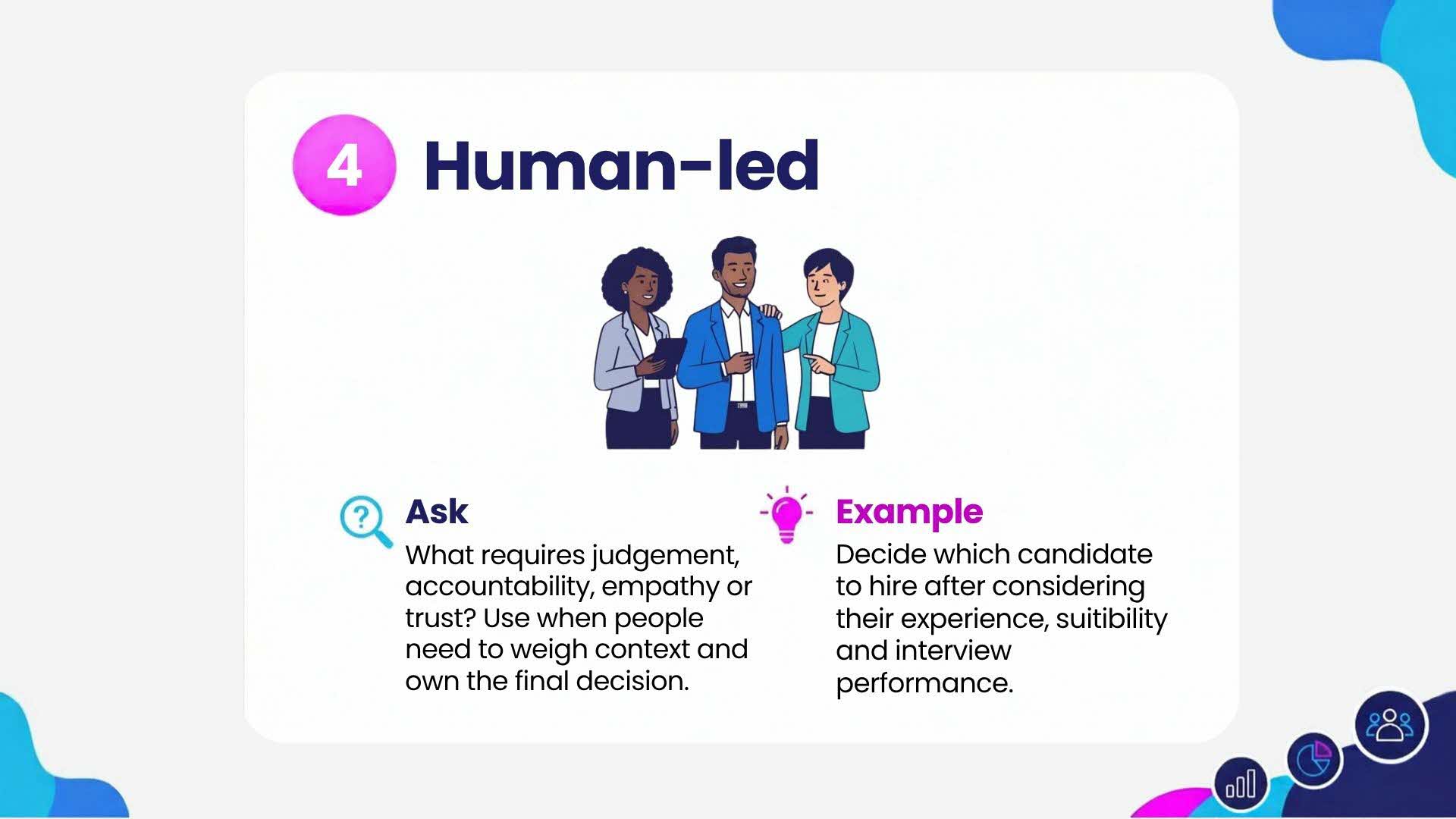
A good outcome may combine all four approaches. The most advanced tool is not always the best tool. Choose the simplest approach that reliably achieves the intended outcome.
Automation and AI are not the same
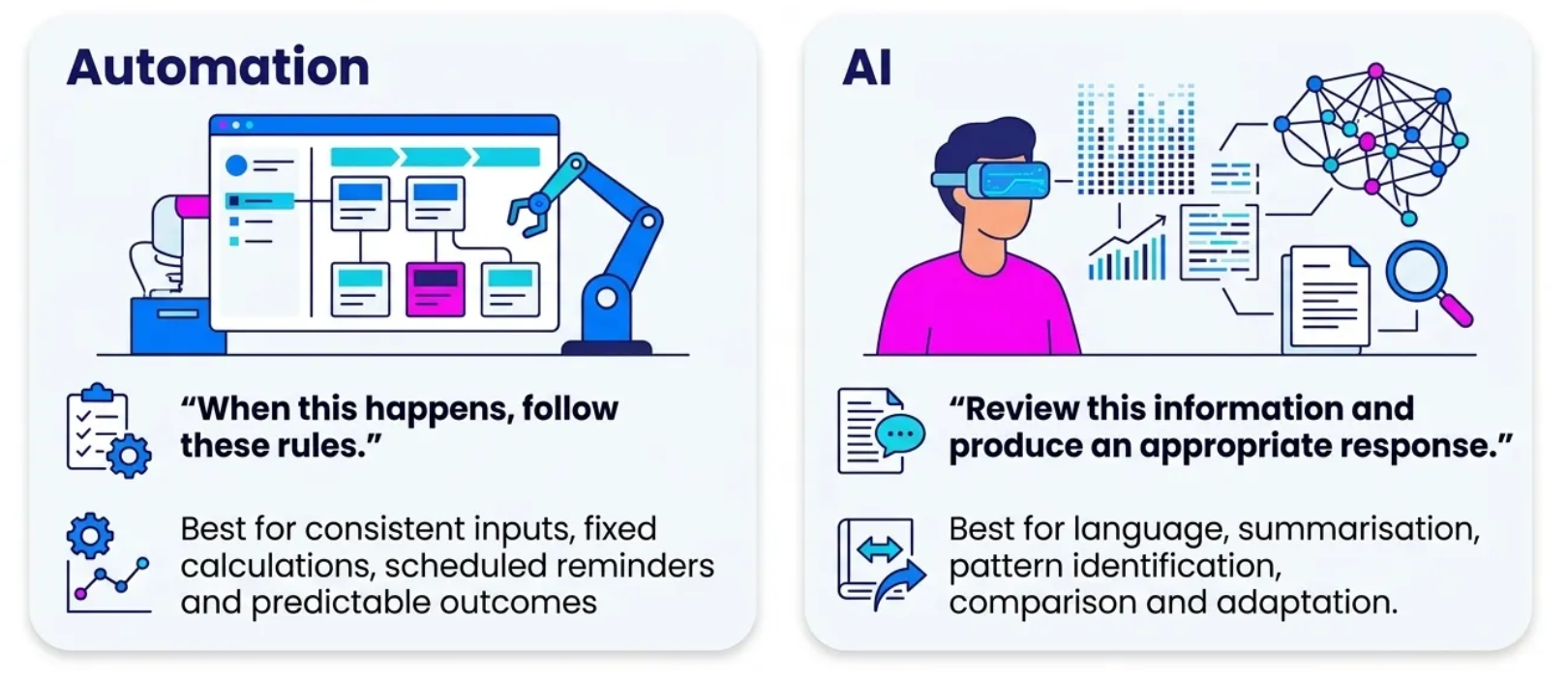
Automation and AI can also work together. For example, automation may send survey responses to an approved location, while AI helps identify themes in those responses.
Check your understanding: How should emails from a known sender be automatically moved into a designated folder?
Recommended approach: Automation.
The sender and required action are already known. A fixed email rule is simpler and more predictable than asking AI to read and classify each message.
📝 Worked example
Let’s apply the framework to the task of preparing a monthly management update.
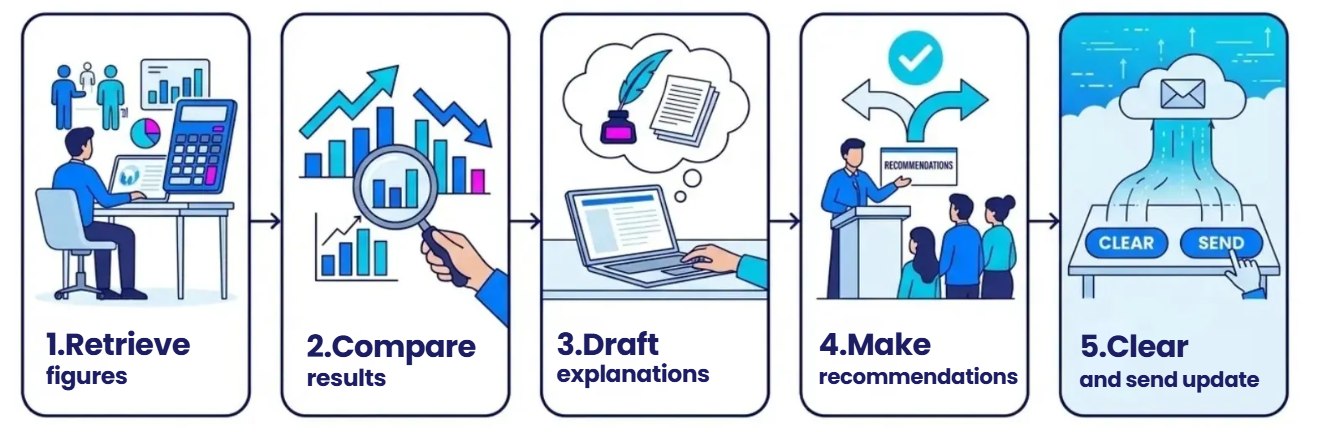
Open each stage to see whether it should be simplified, automated, supported by AI or kept human-led.
1. Retrieve figures and apply standard calculations
Recommended approach: Automation.
The source, calculations and expected outputs are known. These steps can be handled through a predictable, rules-based process.
2. Compare results and identify noteworthy changes
Recommended approach: Automation and Human + AI.
Automation can calculate differences. AI may help identify patterns or prepare an initial explanation. An officer should confirm that the changes are accurate and meaningful.
3. Draft explanations
Recommended approach: Human + AI.
AI can turn approved figures and context into a first draft. The officer should confirm that the explanation is accurate and appropriate for the audience.
4. Make recommendations
Recommended approach: Human-led, with AI support where useful.
AI may help organise options or identify considerations. The final recommendation may require policy, operational and stakeholder judgement.
5. Clear and send the update
Recommended approach: Human approval, followed by automation.
The accountable officer should approve the final position. Once approval has been recorded, distribution may be automated.
Key takeaway
Start with the work, not the tool. Stop or simplify what is unnecessary, automate what follows clear rules, use AI where it adds value, and keep people accountable for important decisions.
Think of one task you currently perform. What could stop? What could be automated? What could be improved with AI? What must you or your team continue to own?