What is AI and why does it matter?
3 November 2026
Learn what AI is, how it can support your work, and how to use it responsibly.
What you need to know about AI
AI is increasingly becoming part of the tools we use at work.
In this lesson, we will learn:
What AI is
How we can use AI at work
How to use AI responsibly
1. What is AI?
At its simplest, AI refers to computer systems that perform tasks that normally require human intelligence.
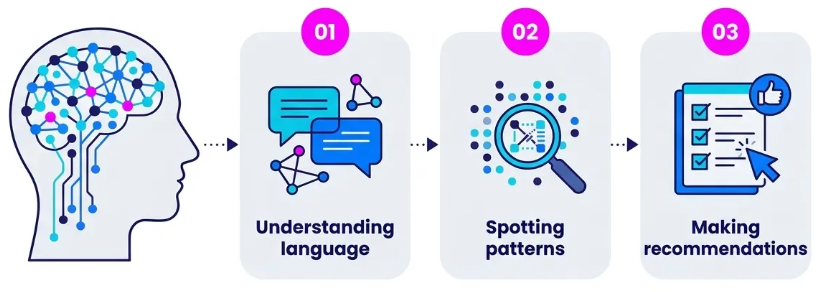
You already use it every day. Your phone predicts your next word. Search engines rank results by relevance. Banks flag unusual transactions automatically.
Generative AI is a type of AI that creates new content - text, images, audio, code, summaries. Popular examples include ChatGPT, Claude, and Gemini.
The process works in three steps:
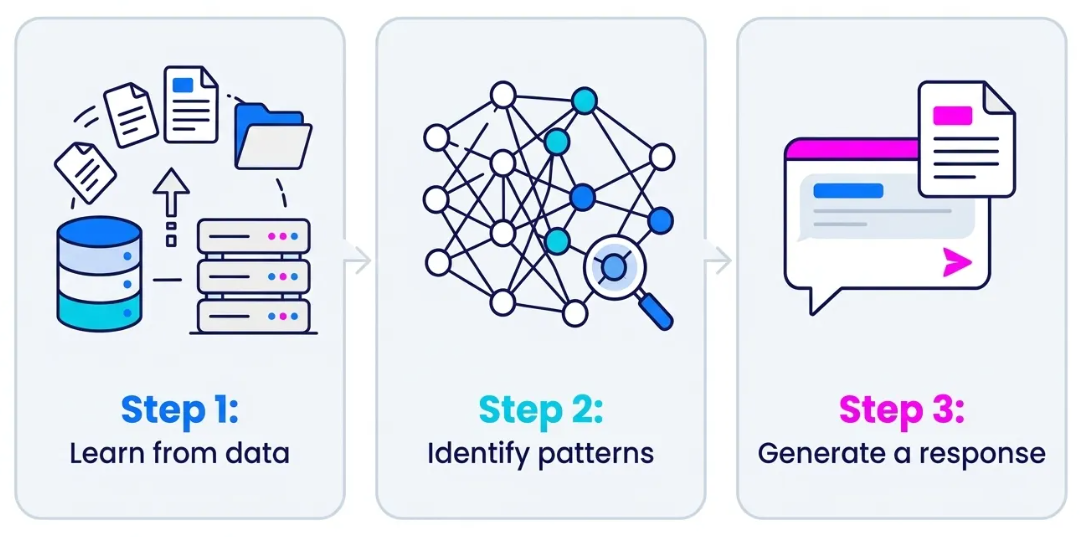
When you type a prompt, it predicts the most likely next words based on patterns learned from vast amounts of data.
2. How can we use AI at work?
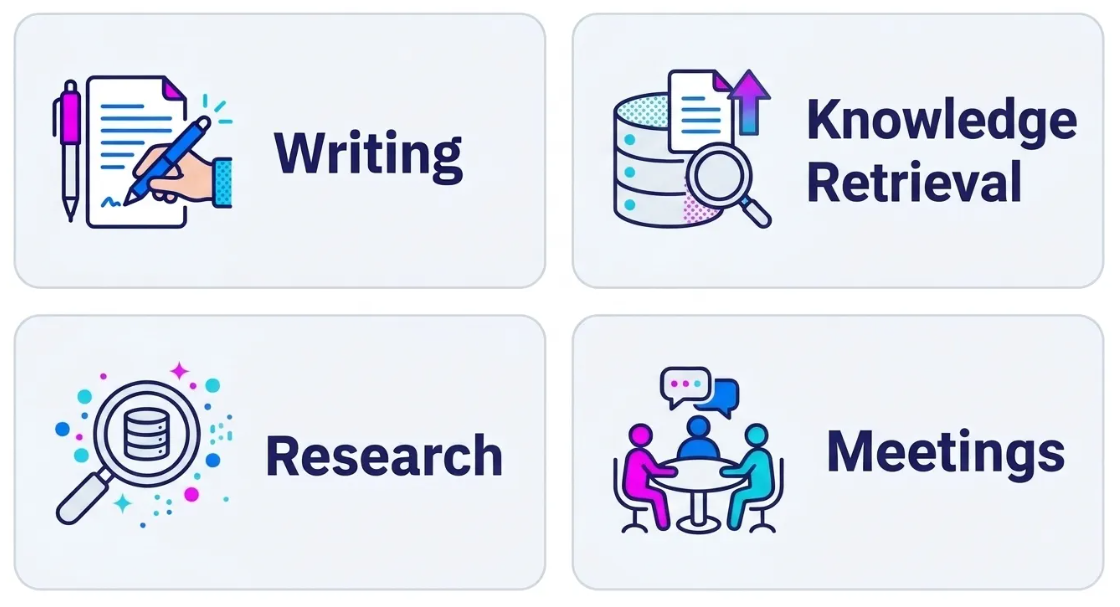
There are many ways to use AI at work. Instead of starting with the tool, it can be helpful to think about these use cases in four common categories:
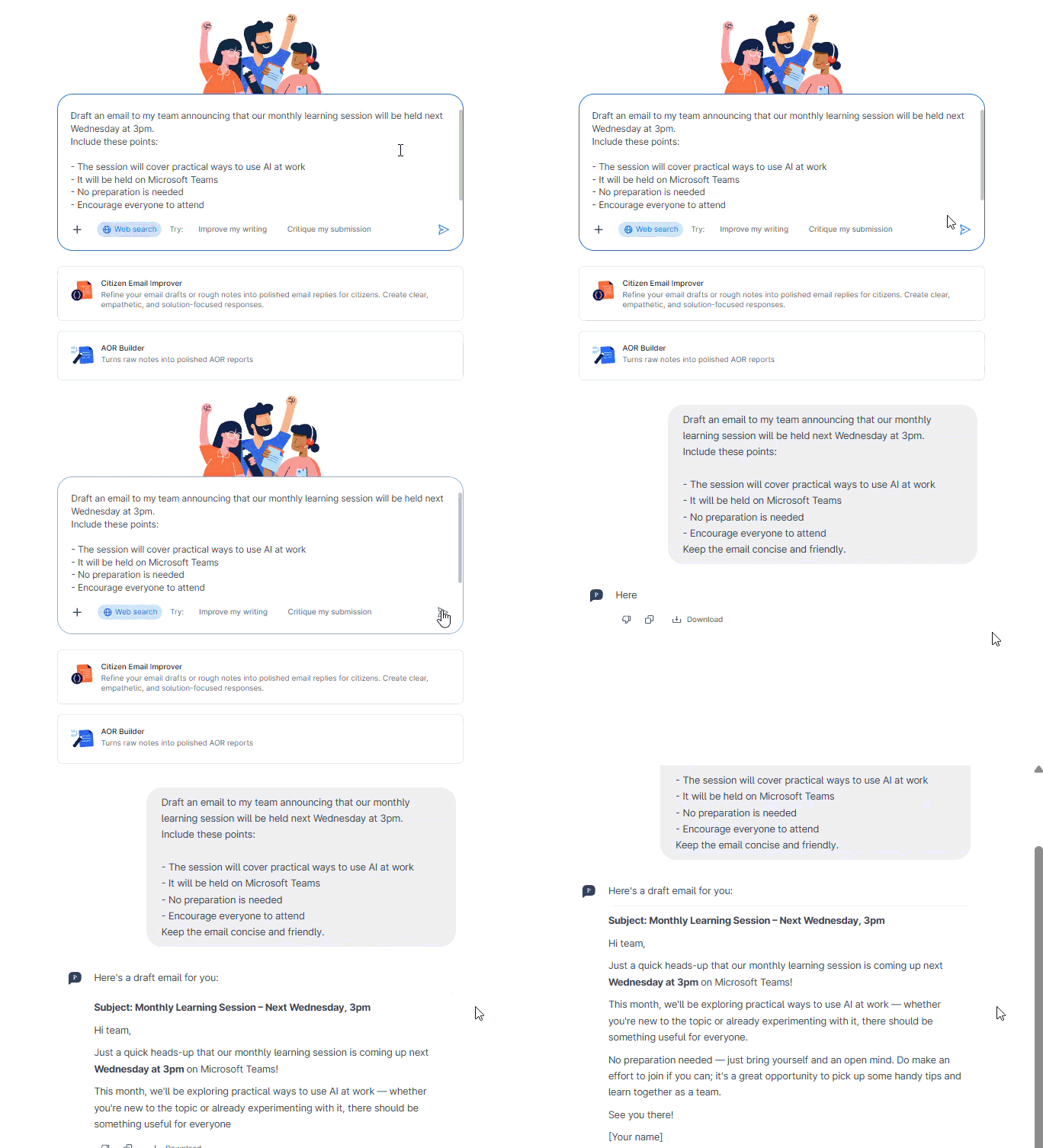
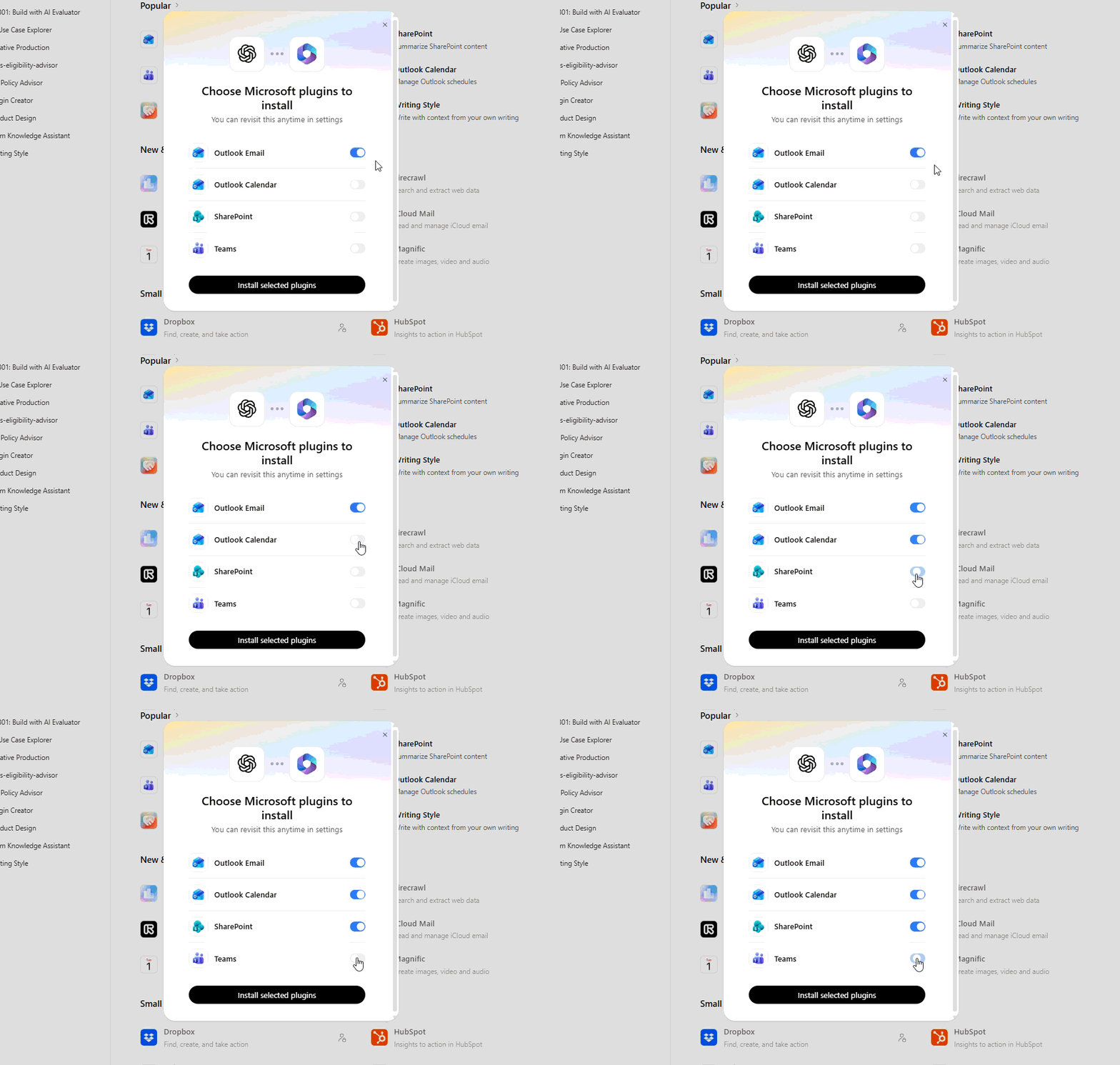
Let's see how these look like in practice, with tools you have access to.
.jpg)
3. Using AI responsibly
AI can help you work faster. It can also create new risks. Using it responsibly means understanding both its strengths and its limitations.
AI can sound confident even when it's wrong.
AI does not take responsibility for its outputs.
Not all AI tools are safe for sensitive information.
That's why responsible AI use matters. A simple way to remember the key principles is the S.A.F.E. framework.
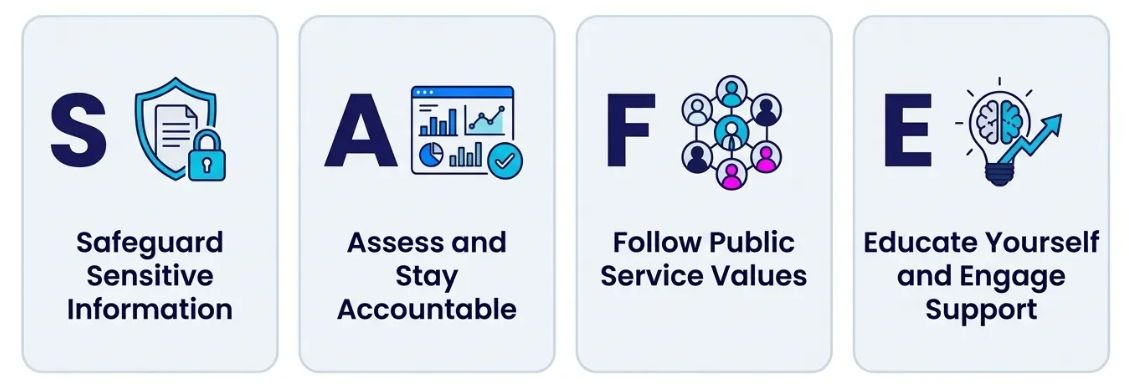
S — Safeguard sensitive information
Before using any AI tool, ask yourself: What information am I about to share?
Not all AI tools have the same security controls. Some tools are designed to handle sensitive organisational information, others are not.
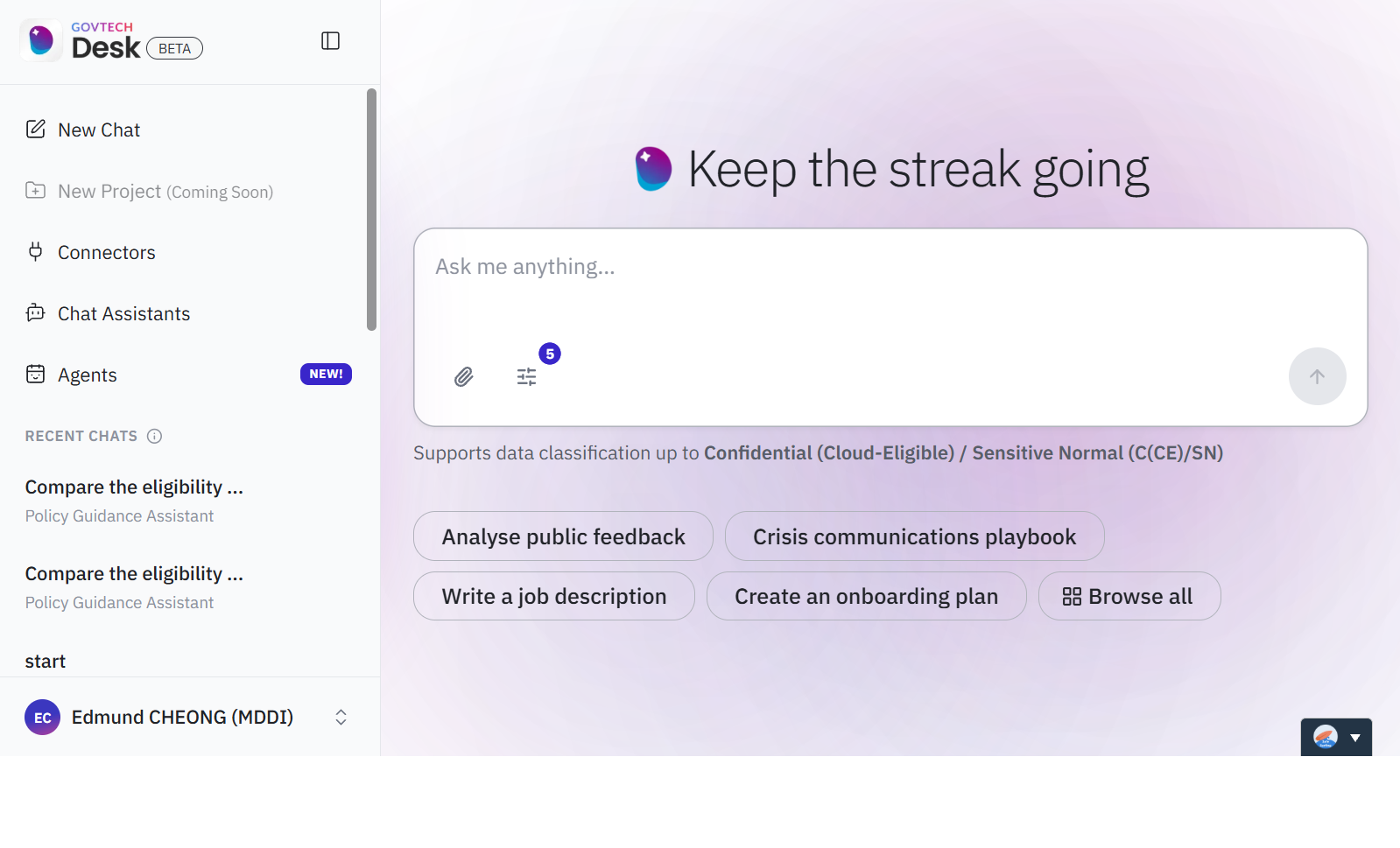
Here is a Data Classification and Sensitivity guide for some of the AI tools you might access:
Classification and Sensitivity | WOG Enterprise AI tools (ChatGPT, Copilot (opens in new tab)) | Government AI tools (Pair (opens in new tab), Desk (opens in new tab)) | Public AI tools |
Confidential / Sensitive (High) & above | No | ||
Confidential (Cloud-Eligible) / Sensitive (Normal) | Yes | No | |
Restricted / Sensitive (Normal) | Yes | Yes | No |
Official (Open/Closed) / Non-Sensitive | Yes | Yes | Yes |
A — Assess and stay accountable
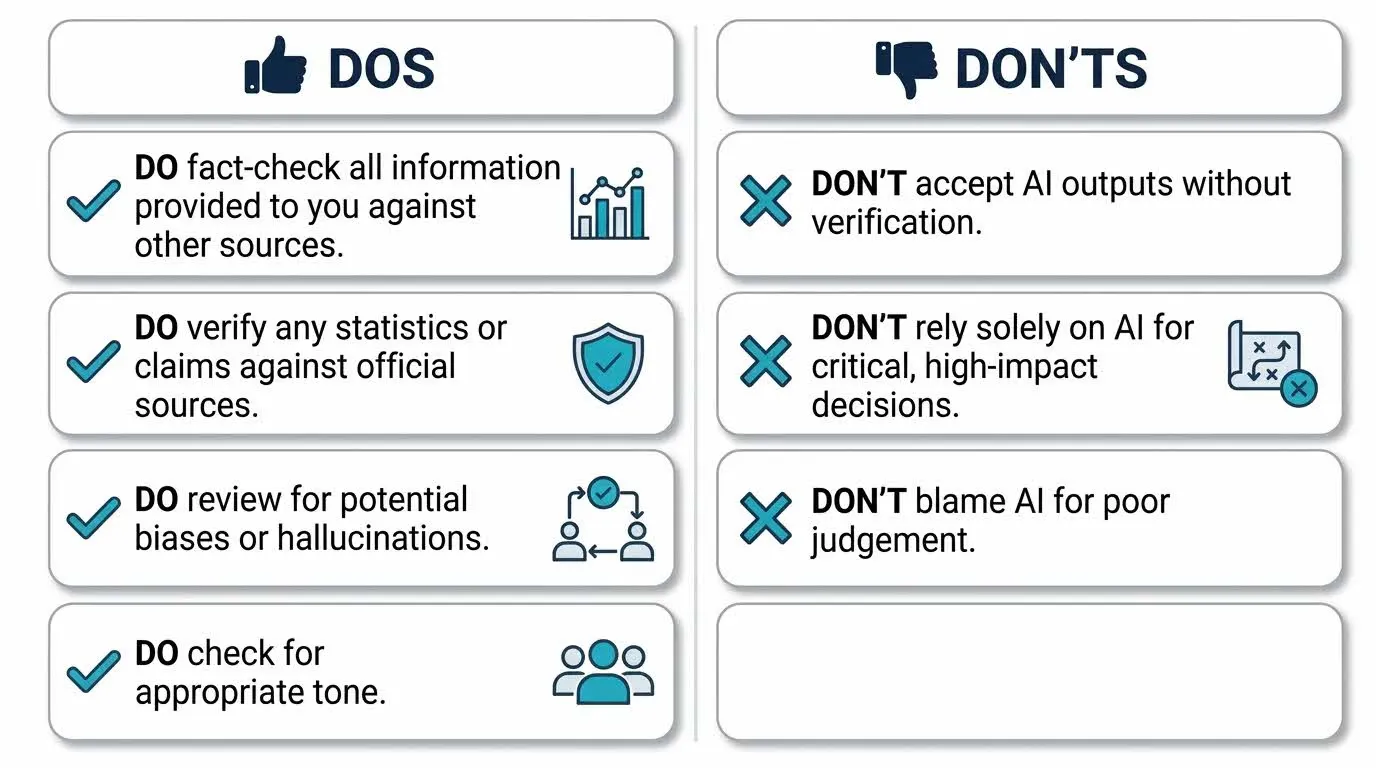
AI can help produce outputs. It cannot take responsibility for them. You remain accountable for:
Accuracy
Fairness
Appropriateness
Compliance
Here are some Dos and Don'ts when using AI in your work:
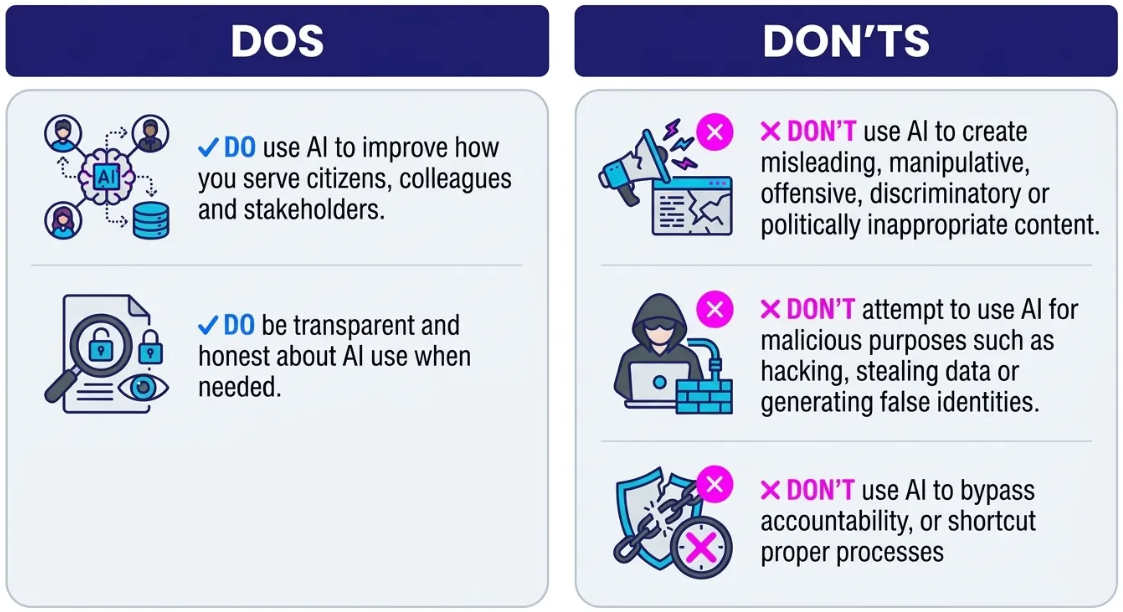
F — Follow public service values
Technology does not change our values. The same values that guide our work should guide our use of AI. This includes acting with:
Integrity
Service
Excellence
E — Educate yourself and engage support
AI is evolving rapidly. New tools, capabilities and guidance emerge regularly.
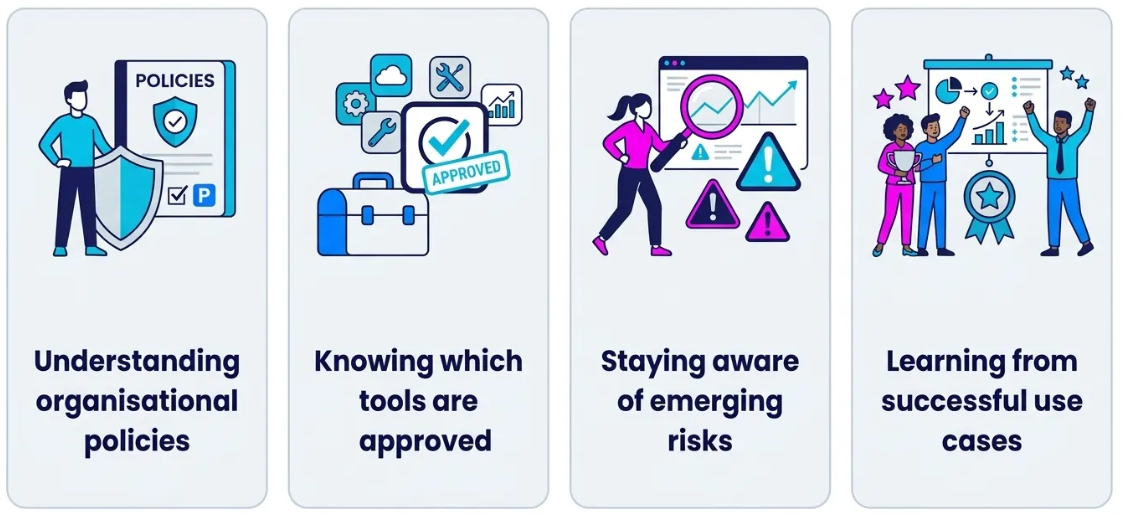
Responsible use requires continuous learning. This does not mean becoming an AI expert. It means staying informed enough to use these tools appropriately. Examples include:
Putting it all together
AI can help you write, find information, conduct research and capture what happens in meetings. The key is to start with the task you want to accomplish, then choose the right tool for the job.
As you explore AI at work, remember that you remain responsible for how you use it and the outputs it produces. Safeguard sensitive information, assess AI-generated content carefully, follow Public Service values, and keep learning as the technology evolves.
You do not need to become an AI expert to get started. Understand what AI can do, use it where it adds value, and apply your judgement along the way.